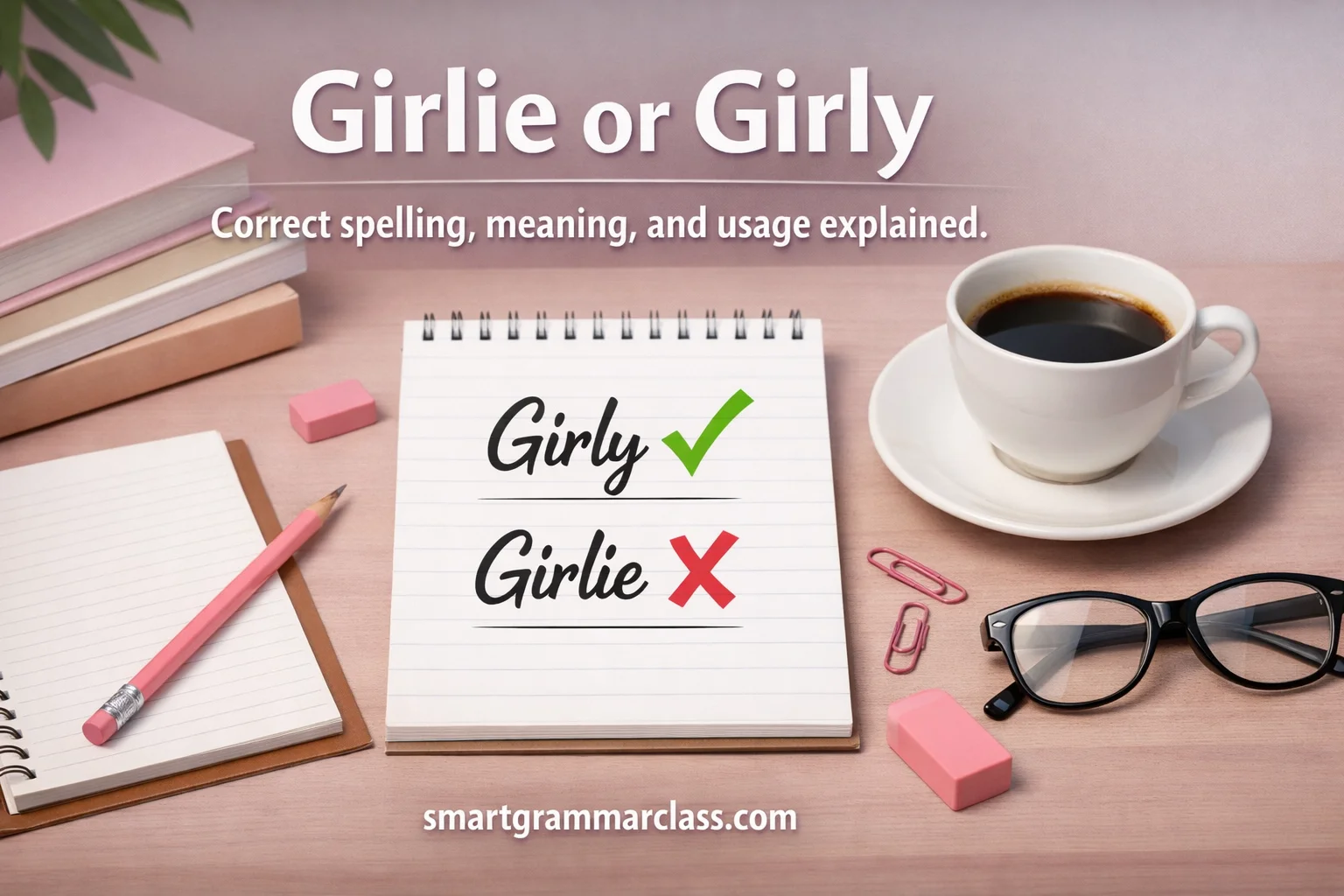
If you’ve ever typed, paused, and wondered which looks better, girlie or girly, you’re not alone. I’ve seen this question come up everywhere in a blog, a post, or even from a curious reader who just got their sentence corrected and suddenly realized how tricky this simple word can be. While searching for a quick guide, I once found that clear explanations remove confusion and help you never second-guess again. In modern english, both forms exist, but girly is the correct, standard, and preferred spelling, especially in professional or written expression, while girlie feels more informal, often used in captions, chat, or social media messages.
The meaning and usage of these words may appear nearly identical, but their connotations, usage patterns, and grammatical functions differ enough to impact your communication. Girly is widely accepted for describing feminine characteristics, styles, or objects, while girlie leans into slang, sounding more endearing, like referring to a friend.
As language shifts fast in 2026, what once seemed okay may feel outdated, while what dominates now is shaped by trends, branding, and what’s actually happening online. I’ve seen learners and even native speakers struggle with these subtle, yet crucial, variations, but once you understand these distinctions, you can write better, speak more naturally, and avoid awkward mistakes that could affect your credibility in different settings, whether it’s casual conversation or cross-cultural communication.
Also read this : Authorization or Authorisation: Correct Spelling and Meaning 2026
Girlie or Girly
If you want the short version here it is:
- “Girly” is the standard correct spelling
- “Girlie” is an informal variation used for tone
- Both are valid depending on context
- One fits formal writing the other thrives in casual spaces
Here’s a quick comparison you can scan:
| Word | Correctness | Tone | Usage Frequency |
| Girly | Standard | Neutral | Very common |
| Girlie | Informal | Playful | Growing fast |
Think of it like this.
“Girly” is the safe choice.
“Girlie” is the stylistic choice.
What Does “Girly” Mean Today? (Modern Usage Explained)
The word “girly” has evolved a lot. It no longer sits in a narrow box. Today it carries layers of meaning depending on how you use it.
At its core “girly” describes something traditionally associated with femininity. That includes:
- Fashion styles like dresses makeup or pastel colors
- Personality traits like softness warmth or expressiveness
- Interests such as beauty routines or aesthetic decor
But here’s where it gets interesting. The tone changes everything.
Positive vs Negative Tone
“Girly” can feel empowering or dismissive depending on delivery.
Positive use:
- “She embraces a girly style and owns it.”
- “Her brand leans into girly aesthetics in a bold way.”
Negative use:
- “That’s too girly for me.”
- “He avoids anything that looks girly.”
Same word. Completely different impact.
Cultural Shift in 2026
In 2026 “girly” often signals confidence not limitation. Many creators and brands reclaim it as a form of identity.
You’ll see it in:
- Lifestyle blogs
- Fashion campaigns
- Influencer branding
- Self-expression language
It no longer means weak. It often means intentional.
What Does “Girlie” Mean? Subtle Differences That Matter
Now let’s talk about “girlie.”
This version doesn’t change the meaning much. What it changes is the feeling.
“Girlie” adds personality. It softens the tone. It makes things feel more intimate or playful.
Where “Girlie” Shows Up
You’ll rarely see “girlie” in formal writing. Instead it lives in spaces like:
- Social media captions
- Text messages
- Brand slogans
- Online communities
Why It Feels Different
Adding “-ie” changes the emotional tone. It feels:
- Warmer
- More casual
- Slightly affectionate
- Trend-driven
Real Examples
- “Hey girlie how are you?”
- “Girlie vibes only today.”
- “That outfit is giving rich girlie energy.”
Notice how it sounds more personal. Almost like a nickname.
Girlie vs Girly — Side-by-Side Comparison
Let’s break it down clearly so you never second guess again.
| Feature | Girly | Girlie |
| Spelling Type | Standard English | Informal variant |
| Tone | Neutral | Playful |
| Use Case | Writing speech | Social media branding |
| Popularity | Very high | Rapidly rising |
| Formal Use | Yes | No |
Key Takeaway
Use “girly” when clarity matters
Use “girlie” when tone matters
Which One Should You Use? (Real-World Scenarios)
Choosing between “girlie” and “girly” gets easier when you think about context.
Use “Girly” When
- Writing essays or academic content
- Creating professional blog posts
- Communicating in business settings
- You want to sound clear and neutral
Example:
“She prefers a girly design style with clean details.”
Use “Girlie” When
- Posting on Instagram or TikTok
- Writing casual messages
- Building a brand voice
- You want a friendly tone
Example:
“Sunday reset for the girlies.”
Quick Decision Guide
- Formal situation → girly
- Casual vibe → girlie
- Not sure → choose girly
Simple. Clean. Effective.
Why “Girlie” Is Trending in 2026
“Girlie” didn’t just appear randomly. It grew fast because of cultural shifts.
Social Media Influence
Platforms like TikTok and Instagram pushed expressive language forward. People wanted words that felt personal not robotic.
“Girlie” fits that perfectly.
Aesthetic Language
Modern communication leans into mood and vibe. Words now carry emotion beyond definition.
“Girlie” helps create:
- Aesthetic identity
- Community belonging
- Brand personality
Branding Power
Businesses started using “girlie” to connect with audiences.
Examples include:
- Beauty brands
- Lifestyle influencers
- Wellness communities
It feels human. That matters.
Common Mistakes People Make (And How to Avoid Them)
Even simple words can trip people up. Here are the most common mistakes.
Using “Girlie” in Formal Writing
This happens a lot. It weakens credibility.
Wrong:
“The brand targets a girlie audience in professional reports.”
Right:
“The brand targets a girly audience.”
Assuming One Is Incorrect
Some people think “girlie” is wrong. It isn’t.
It’s just informal.
Overusing Trendy Language
Too much “girlie” can sound forced.
Balance matters.
Quick Fix Checklist
- Match tone to audience
- Keep formal writing clean
- Use trends sparingly
- Prioritize clarity over style
Girly vs Girl — Don’t Confuse These
This confusion pops up more than you’d expect.
The Difference
- Girl → noun
- Girly → adjective
- Girlie → stylistic variation
Examples That Make It Clear
- “She is a girl.”
- “She has a girly personality.”
- “Hey girlie what’s up?”
Each serves a different role. Mixing them up creates awkward sentences.
Everyday Examples That Actually Sound Natural
Let’s ground this in real language. These examples sound like something you’d actually say.
With “Girly”
- “I like your girly aesthetic.”
- “Her room has a soft girly feel.”
- “That brand leans very girly.”
With “Girlie”
- “Girlie you need this product.”
- “Hot girlie walk this morning.”
- “That’s such a girlie thing to say.”
Notice the rhythm. “Girlie” feels more expressive.
Is “Girlie” Grammatically Correct?
Yes. It is grammatically acceptable.
But context still matters.
Where It Works
- Casual writing
- Conversations
- Creative content
Where It Doesn’t
- Academic papers
- Business documents
- Professional reports
Why
Grammar rules allow variation. Tone decides appropriateness.
Case Study — How Brands Use “Girlie” vs “Girly”
Let’s look at how this plays out in real branding.
Brand A — Professional Beauty Company
Uses “girly” in product descriptions.
Why it works:
- Keeps tone polished
- Appeals to broad audience
- Maintains credibility
Brand B — Social Media Influencer
Uses “girlie” in captions.
Why it works:
- Builds connection
- Feels relatable
- Matches platform tone
Key Insight
Different contexts demand different language. Smart brands adapt.
Practical Writing Tips You Can Use Immediately
If you write often this matters more than you think.
Tips That Improve Your Writing
- Choose tone before choosing words
- Read sentences out loud
- Avoid forcing trendy terms
- Keep your audience in mind
Quick Editing Trick
Replace “girlie” with “girly” and see if the sentence still works.
If yes you’re safe.
If not you’re relying too much on tone.
Deep Linguistic Insight — Why “-ie” Changes Tone
This isn’t random. There’s a pattern behind it.
Adding “-ie” or “-y” often creates:
- Diminutives
- Terms of endearment
- Softer emotional tone
Examples include:
- Dog → doggie
- Mom → mommy
- Girl → girlie
It signals familiarity. That’s why it feels warmer.
Final Verdict — Girlie or Girly?
Here’s the bottom line.
- “Girly” is correct standard and reliable
- “Girlie” is expressive casual and modern
Neither is wrong. Each serves a purpose.
Use them intentionally. That’s what separates average writing from strong writing.
Quick Recap Cheat Sheet
- Girly = standard safe clear
- Girlie = trendy expressive casual
- Formal writing → girly
- Social tone → girlie
- Context decides everything
FAQs
What is the correct spelling: girlie or girly?
The correct and more widely accepted spelling is girly. It is used in standard English, especially in writing, while girlie is considered informal and more common in casual chats or social media.
Do girlie and girly have the same meaning?
They are very close in meaning, but not exactly the same. Girly describes something feminine in a general way, while girlie feels more playful or affectionate, often used for a person.
Is it wrong to use girlie in writing?
It’s not wrong, but it depends on the context. Girlie works fine in informal writing like messages or captions, but in professional or academic writing, girly is the better choice.
Why do people get confused between girlie and girly?
People get confused because both words look similar and sound the same. Also, online trends and slang make girlie seem more common, even though girly is the standard form.
Which word should I use in 2026?
In 2026, you should mostly use girly for correct and clear communication. Use girlie only when you want a casual, trendy, or friendly tone in conversations or social media.
Conclusion
In 2026, understanding the difference between girlie and girly helps you use the correct spelling, clear meaning, and proper usage in any situation. While girly remains the standard and preferred choice in most forms of writing and communication, girlie still has a place in informal, friendly, and social media contexts. As language continues to evolve with trends, knowing these small but important distinctions allows you to write better, avoid mistakes, and express yourself more naturally and confidently.

Emma Brooke is a dedicated grammar expert and language educator with a strong passion for helping learners master the English language with clarity and confidence. With years of hands-on experience in teaching grammar, writing, and communication skills, she specializes in breaking down complex language rules into simple, practical explanations.
At Smart Grammar Class, Emma focuses on creating accurate, easy-to-understand, and well-researched content that supports students, professionals, and everyday learners in improving their writing and speaking skills. Her approach combines real-world usage, clear examples, and structured guidance to ensure learners not only understand grammar rules but can apply them effectively.
Emma is committed to maintaining high editorial standards, ensuring every piece of content is reliable, up-to-date, and aligned with modern English usage. Her work reflects a deep understanding of language learning challenges and a mission to make grammar accessible to everyone.