I still remember when I first typed “make due” and then paused, feeling unsure if it was correct. If you also worry about this, you are not alone. This small mistake happens countless times, especially when learning English and trying to polish your grammar. Let me break down the difference in a simple way so your doubt is cleared.
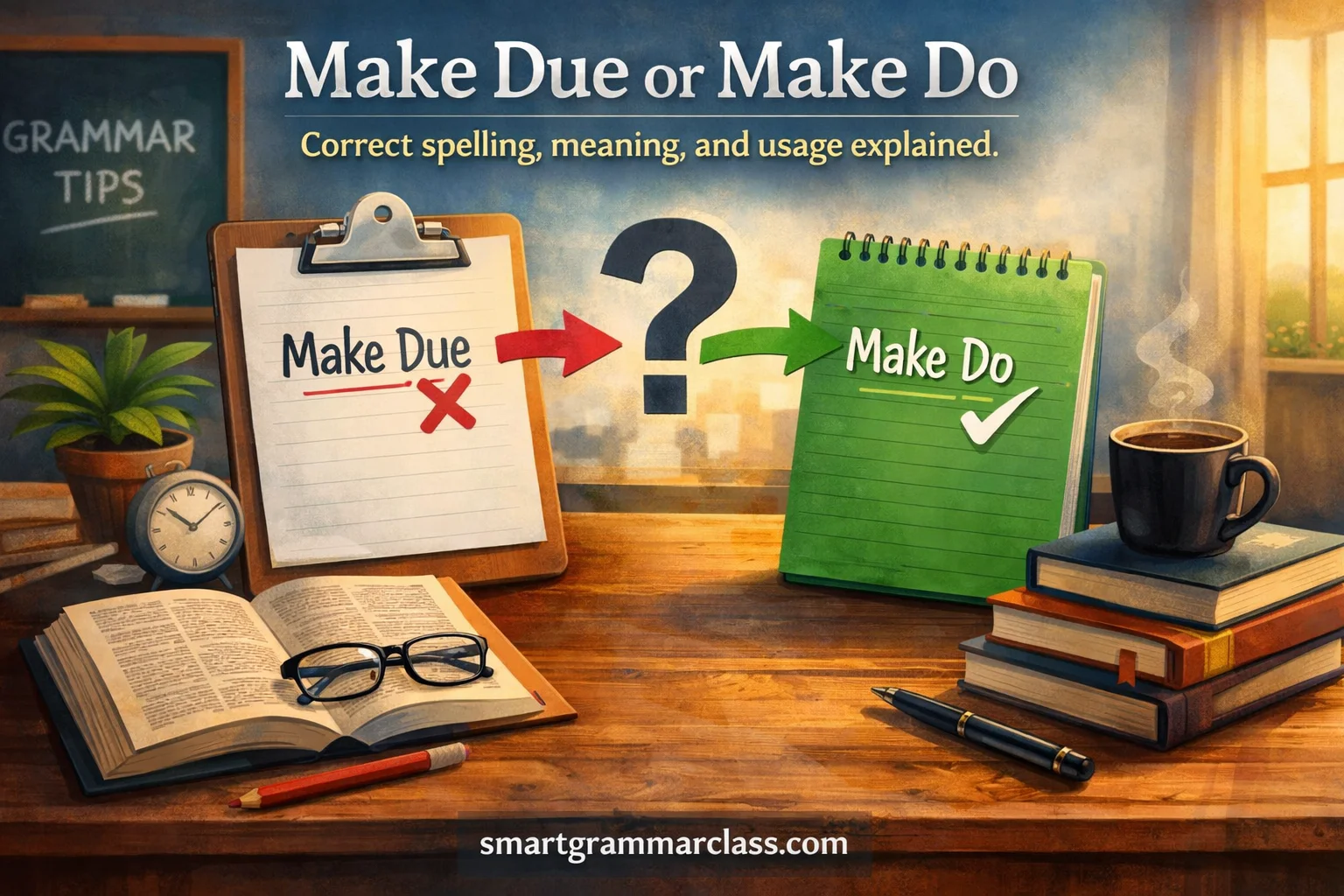
The quick answer is that make do is the correct phrase, an idiom that means to manage with limited resources or get along with what is available. For example, if your refrigerator is empty, you might cook eggs for dinner and make do. It may not be ideal, but it is functional and helps you meet needs or day-to-day needs. This spelling shift may look harmless, but it can flip meaning or make your writing less clear. In real context, using the right form gives practical insight into how the English language works.
On the other hand, make due is a common misspelling, an outdated and incorrect variation that sometimes looks logical because of words like due diligence, due cause, or something sufficient and appropriate. Some people and commenters in forums and online spaces try to justify it with logical assertions, but most dictionaries like Cambridge Dictionary, Collins Dictionary, and Merriam-Webster Dictionary support only the standard form make do in edited writing across the English-speaking world.
A Google News search may show the wrong version once in ten instances, but that does not mean real acceptance. In rare situations, “due” can mean to serve a specified purpose, but that rare sense does not apply here. To utilize a useful trick, just remember: if you can live without something or accept a worse quality option, you make do.
Also read this : Girlie or Girly: Correct Spelling, Meaning and Usage 2026
Make Due or Make Do The Fast, No-Nonsense Answer
Here’s the truth. Simple and direct.
- Correct phrase: make do
- Incorrect phrase: make due
If you’re writing anything that needs to sound polished, skip “make due” completely. It’s not a variant. It’s not a regional spelling. It’s just wrong.
A quick memory trick
Think of this:
You do something when you act.
You make do when you act with what you have.
That mental shortcut sticks. It works every time.
What “Make Do” Really Means (With Real Context)
At its core, make do means adapting. It means pushing forward even when resources fall short.
Instead of waiting for perfect conditions, you work with what’s available.
Simple definition
Make do: to manage with limited or insufficient resources.
But definitions alone don’t paint the full picture. Let’s bring it into real life.
Everyday situations where people “make do”
- Your fridge is nearly empty so you cook a meal from random leftovers
- Your laptop breaks and you temporarily use an old one
- You’re short on money so you delay purchases and adjust spending
- A team lacks tools so they improvise to finish a project
Notice the pattern. There’s always a constraint. Yet action still happens.
The deeper idea behind “make do”
It reflects resourcefulness.
It hints at resilience.
It often shows quiet determination.
That’s why the phrase feels so human. It’s not just about limitation. It’s about response.
Why “Make Due” Is Incorrect (And Why People Still Use It)
Now here’s where confusion creeps in.
“Make due” looks right at first glance. The word due feels formal. It appears in phrases like:
- due date
- due process
- due diligence
So people assume it belongs here too. It doesn’t.
What “due” actually means
The word due relates to:
- something owed
- something expected
- something scheduled
For example:
- “The payment is due tomorrow.”
- “Respect is due to those who earned it.”
None of those meanings connect to improvising or managing with less.
Why the mistake happens
Several factors drive the confusion:
- Phonetic similarity – “do” and “due” sound alike
- Spellcheck blind spots – both are real words
- Overcorrection – people assume “due” sounds more formal
- Search habits – incorrect usage spreads online
Once a mistake appears often enough, it starts to feel normal. That’s how language traps form.
A subtle but important point
“Make due” isn’t just slightly off. It changes meaning entirely. In fact, it doesn’t form a meaningful phrase at all.
That’s why using it in professional writing can quietly damage credibility.
The Origin of “Make Do” (Where It Actually Comes From)
Understanding where a phrase comes from helps it stick.
Make do dates back several centuries. It gained traction in early modern English, especially in contexts tied to necessity and survival.
Historical roots
- Popularized during times of scarcity
- Widely used during wartime economies
- Linked to thrift culture and minimalism
One famous phrase captures the spirit:
“Make do and mend”
This slogan became prominent during World War II. People were encouraged to repair and reuse instead of buying new items.
Why the phrase endured
It survived because the concept never went out of style.
Even today, people:
- stretch budgets
- improvise solutions
- adapt under pressure
The phrase stayed relevant because life keeps presenting imperfect conditions.
British vs American English Is There Any Difference?
This is where many expect a twist. There isn’t one.
Both American English and British English use:
- make do (correct)
- make due (incorrect)
Why the confusion still exists
People often assume spelling differences explain variations. That’s true for words like:
- color vs colour
- organize vs organise
But not here.
This phrase stays consistent across both language systems. No exceptions.
When You Should Use “Make Do” (Practical Use Cases)
Knowing the meaning is one thing. Using it naturally is another.
Situations where “make do” fits perfectly
- Casual conversation
- Personal storytelling
- Informal writing
- Describing limitations or constraints
Examples in context
- “We didn’t have enough chairs so guests had to make do.”
- “I’ll make do with this phone until I upgrade.”
- “They made do during tough times and came out stronger.”
Where you should be careful
In formal writing, tone matters. While “make do” is correct, it may feel too casual in:
- academic papers
- legal documents
- technical reports
In those cases, alternatives like “manage with limited resources” or “operate under constraints” may sound more precise.
Common Mistakes People Make With “Make Do”
Even when people know the correct phrase, small errors still slip in.
Frequent mistakes
- Writing “make due” in emails
- Using the phrase in the wrong context
- Overusing it instead of more specific wording
- Mixing it with unrelated expressions
Example of misuse
❌ “We will make do the deadline.”
✅ “We will meet the deadline.”
Here, “make do” doesn’t fit because there’s no resource limitation involved.
Quick checklist
Before using “make do,” ask:
- Is there a limitation or shortage?
- Am I describing adaptation?
- Does the sentence imply compromise?
If the answer is yes, you’re on the right track.
Easy Examples That Sound Natural (Not Robotic)
Let’s keep it real. No stiff textbook lines.
Natural usage examples
- “I forgot my charger but I’ll make do for now.”
- “We didn’t have the right tools so we made do.”
- “It’s not ideal but I can make do.”
Incorrect vs correct
- ❌ “I had to make due with it.”
- ✅ “I had to make do with it.”
A short scenario
Imagine you’re traveling. Your luggage gets delayed. You only have what’s in your backpack.
You don’t panic. You adjust. You improvise.
You make do.
That’s the phrase in action.
Quick Comparison Table: Make Do vs Make Due
| Phrase | Correct | Meaning | Usage Status |
| Make do | Yes | Manage with what’s available | Standard |
| Make due | No | Incorrect phrase | Avoid |
This table might be simple, but it answers the question instantly.
Make Do vs Similar Phrases (Clear Distinctions)
English offers plenty of alternatives. Each carries a slightly different tone.
Make do vs Get by
- Make do: emphasizes improvisation
- Get by: focuses on survival or coping
Example:
“I’m just trying to get by” feels more emotional.
“I’ll make do” feels more practical.
Make do vs Manage
- Make do: suggests limitation
- Manage: broader and more neutral
Example:
“I managed the situation” doesn’t imply scarcity.
“I made do” clearly does.
Make do vs Settle
- Make do: active adaptation
- Settle: passive acceptance
Example:
“Don’t settle for less” carries a different emotional weight.
“Make do with less” suggests necessity, not choice.
Google Trends & Real Usage Data (2026 Insights)
Data reveals something interesting.
Even though make do is correct, make due still shows up in search queries.
What the trends show
- “Make do” dominates correct usage
- “Make due” spikes due to confusion
- Misspellings often rise during academic seasons
What this means for writers
- Correct usage builds trust
- Incorrect phrases hurt authority
- Search optimization still benefits from addressing common mistakes
That’s why high-quality content explains both forms clearly.
Related Confusing Phrases You Should Know
If “make due vs make do” tripped you up, you’re not alone. English has plenty of similar traps.
Common examples
- Drier vs Dryer
- Affect vs Effect
- Loose vs Lose
Why these mistakes happen
- Similar spelling
- Similar pronunciation
- Overlapping meanings
A useful tip
When in doubt, pause and test the sentence out loud. If it sounds off, it probably is.
FAQs
What is the correct phrase: make due or make do?
The correct phrase is make do. It is a common idiom in the English language that means to manage with limited resources or use what you have.
Why do people often mistake make due as correct?
Many people feel it is logical because of words like due diligence or due cause, but this creates a common misspelling. The confusion happens during learning English and trying to polish grammar.
What does make do actually mean in real context?
In real context, make do means to get along with the means available. For example, if your refrigerator is empty, you might cook eggs for dinner and still make do.
Is make due ever acceptable in writing?
No, it is considered an incorrect variation in edited writing. Most dictionaries like Merriam-Webster Dictionary and Cambridge Dictionary only support the standard form make do.
How can I avoid this confusing grammar mistake?
A useful trick is to remember that make do is about dealing with less or live without something better. You can also use tools like QuillBot Grammar Checker to catch common errors and ensure correct spelling.
Conclusion
In the end, understanding the difference between make due and make do helps you avoid a very common mistake in the English language. The correct phrase is make do, which means to manage with limited resources and still meet needs in everyday situations. While make due may seem logical, it remains an incorrect variation and is not accepted in standard form writing or by trusted dictionaries. Keeping this small rule in mind will improve your grammar, make your writing more clear, and help you use the language more accurately.

Emma Brooke is a dedicated grammar expert and language educator with a strong passion for helping learners master the English language with clarity and confidence. With years of hands-on experience in teaching grammar, writing, and communication skills, she specializes in breaking down complex language rules into simple, practical explanations.
At Smart Grammar Class, Emma focuses on creating accurate, easy-to-understand, and well-researched content that supports students, professionals, and everyday learners in improving their writing and speaking skills. Her approach combines real-world usage, clear examples, and structured guidance to ensure learners not only understand grammar rules but can apply them effectively.
Emma is committed to maintaining high editorial standards, ensuring every piece of content is reliable, up-to-date, and aligned with modern English usage. Her work reflects a deep understanding of language learning challenges and a mission to make grammar accessible to everyone.