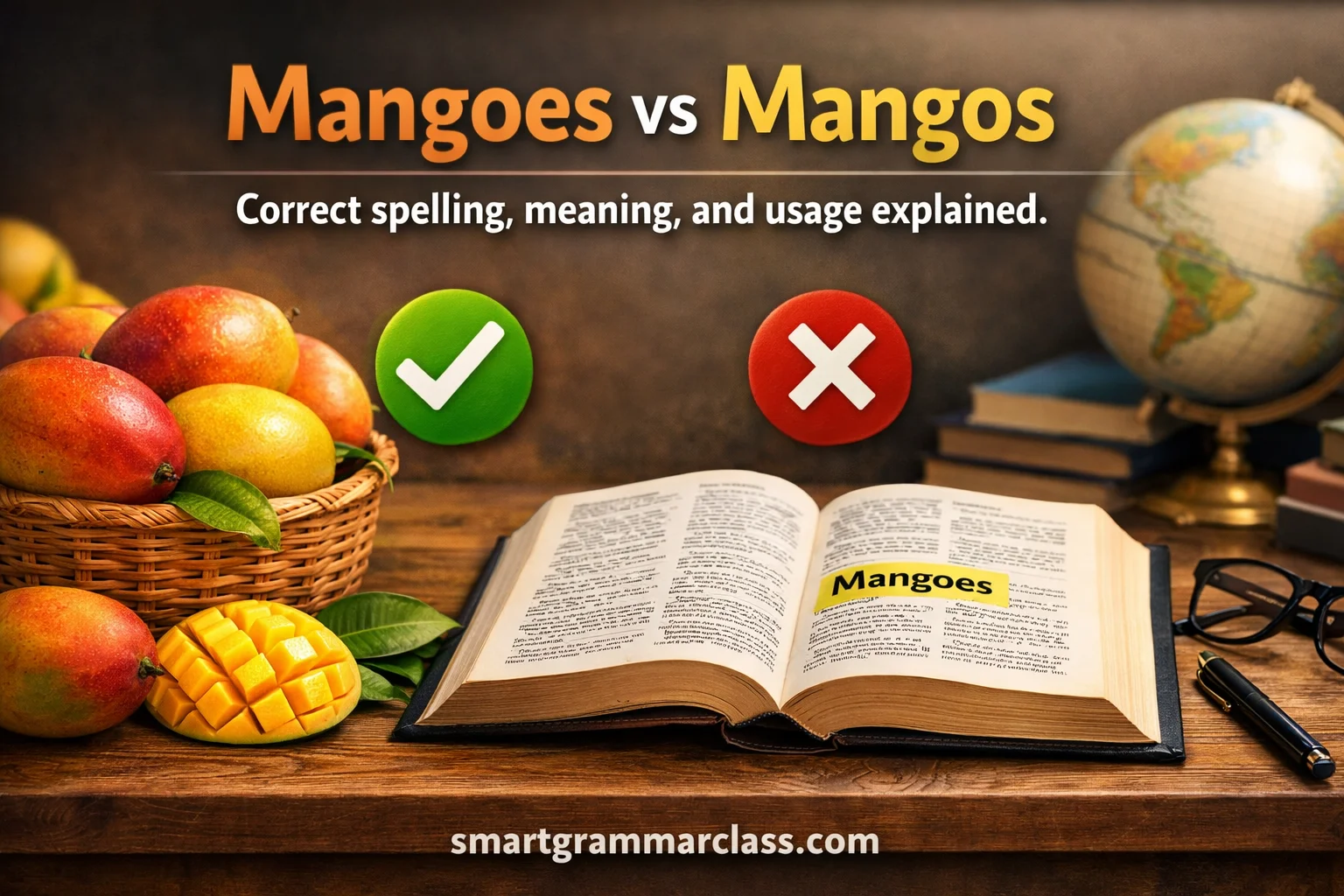
If you’ve ever paused, mid-sentence, wondering whether to write mangoes or mangos, you’re not alone. As someone who works closely with writing, I’ve seen many writers, students, and learners face this small but real confusion. In the English language, both plural forms actually exist, and both are acceptable according to trusted dictionaries like Oxford and Merriam-Webster. The correct spelling depends on style, but for better clarity and a more polished feel, many prefer mangoes in formal communication.
Here’s the simple answer to this fruity question: English grammar has flexible rules that sometimes adapt or even break patterns. Most nouns that end in a vowel plus consonant just add “s” like kangaroos, radios, or photos, but some take “es” like potatoes and banjoes. That’s why both mangos and mangoes are used, just like avocados and avocadoes.
During a recent trip to the grocery store, I noticed labels using both, and even the National Mango Board has decided to use mangos. No matter your preferred choice, the key is to understand the nuance, practice with example sentences and exercises, and build strong vocabulary and grammar skills while exploring this tropical delight and its culinary versatility without ever having to hesitate again.
Also read this : Patient vs Patience: Correct Spelling, Meaning, Usage and Real Examples 2026
Quick Answer: Mangoes vs Mangos
Let’s start with clarity.
- Both “mangoes” and “mangos” are correct plural forms
- “Mangoes” is more widely accepted globally
- “Mangos” appears often in American English
- Formal writing strongly favors “mangoes”
If you want a safe choice, go with mangoes. It works everywhere. No second guessing needed.
What Does “Mango” Actually Mean?
Before diving into spelling, let’s define the word.
A mango refers to a tropical fruit known for its:
- Sweet and juicy flesh
- Smooth outer skin
- Large flat seed in the center
It belongs to the species Mangifera indica. This fruit thrives in warm climates such as India, Pakistan, and Southeast Asia.
Beyond the Fruit
The word “mango” has stretched into other meanings over time:
- Color reference: A warm yellow-orange tone
- Culinary use: Often used in juices, desserts, chutneys
- Cultural symbol: Represents richness and tropical abundance
Language evolves. Words expand. Mango is no exception.
Why Do Two Plural Forms Exist?
This is where things get interesting.
English forms plurals in different ways depending on word origin and usage patterns. Words ending in -o can follow two paths:
- Add -es → mangoes
- Add -s → mangos
There’s no single rule that applies to all.
Compare Similar Words
| Singular | Plural Form | Rule Type |
| Mango | Mangoes / Mangos | Flexible |
| Tomato | Tomatoes | Adds -es |
| Hero | Heroes | Adds -es |
| Piano | Pianos | Adds -s |
| Photo | Photos | Adds -s |
So what decides the outcome?
Usage does. Over time, people settle into patterns. Those patterns become accepted forms.
The Origin of Mango and Its Plurals
Every word carries a story. Mango traveled far before reaching modern English.
Linguistic Journey
- Tamil: “mankay”
- Portuguese: “manga”
- English: “mango”
When English adopted the word, speakers applied familiar plural rules. Some added -es while others kept it simple with -s.
Both forms stuck.
Why That Matters
Words borrowed from other languages often keep flexible endings. That flexibility explains why “mangoes vs mangos” still exists today.
Mangoes vs Mangos in American and British English
Spelling preferences shift depending on location. This difference shows up clearly here.
American English
- Uses both “mangoes” and “mangos”
- “Mangos” appears more in:
- Grocery packaging
- Restaurant menus
- Casual writing
British English
- Strong preference for “mangoes”
- Considered the standard form in formal writing
Regional Comparison Table
| Region | Preferred Usage |
| United States | Mangoes / Mangos |
| United Kingdom | Mangoes |
| Australia | Mangoes |
| Global English | Mangoes |
If your audience is global, choose mangoes. It feels natural across regions.
Which Spelling Should You Use?
This question matters more than it seems.
Use “Mangoes” When
- Writing blogs or articles
- Creating academic content
- Publishing professional material
- Targeting an international audience
Use “Mangos” When
- Writing casually
- Mimicking conversational American tone
- Referring to branding or packaging
Quick Decision Guide
| Situation | Best Choice |
| Formal blog post | Mangoes |
| School assignment | Mangoes |
| Casual text message | Mangos |
| Marketing copy | Mangoes |
When unsure, stick with mangoes. It reads cleaner. It avoids friction.
Common Mistakes with Mangoes vs Mangos
Even simple words cause confusion. Let’s clear up the most common errors.
Mistakes You Should Avoid
- ❌ Using “mango’s” as a plural
- ❌ Switching between forms in one article
- ❌ Assuming one version is wrong
Correct Usage Examples
- ✔ I bought fresh mangoes yesterday
- ✔ The store sells ripe mangos in summer
- ✔ These mangoes taste amazing
Plural vs Possessive
| Form | Meaning | Example |
| Mangoes | Plural | I love mangoes |
| Mangos | Plural | Mangos are sweet |
| Mango’s | Possessive | The mango’s flavor is rich |
That apostrophe trips people up. Don’t let it.
Real-World Examples That Make It Stick
Understanding improves when you see real usage.
Everyday Sentences
- She sliced fresh mangoes for dessert
- The market imported tropical mangos this week
- These mangoes smell incredibly sweet
- Organic mangos cost slightly more
Quick Observation
Both sound natural. However, mangoes feels more polished in writing.
Usage Trends and Data Insights
Let’s move beyond opinion and look at actual data.
Search Trends Overview
- “Mangoes” gets higher global search volume
- “Mangos” spikes in United States searches
- Academic and formal sites favor mangoes
Trend Comparison Table
| Metric | Mangoes | Mangos |
| Global popularity | High | Medium |
| US usage | High | High |
| Academic usage | Very High | Low |
| Informal usage | Medium | High |
What This Means for You
If your goal is reach and authority, mangoes performs better.
Case Study: How Brands Use Mangoes vs Mangos
Let’s look at how real businesses handle this.
Grocery Stores
Most large retailers use:
- “Mangoes” in product descriptions
- “Mangos” occasionally on labels
Food Blogs
Top-ranking food blogs prefer:
- Mangoes in recipes
- Consistent spelling across content
Why Consistency Matters
Search engines reward clarity. Mixed spelling creates confusion.
Linguistic Insight: Why “Mangoes” Feels More Natural
Here’s something subtle but important.
Words like:
- Tomatoes
- Potatoes
- Heroes
Follow the -es pattern. Your brain recognizes that pattern instantly.
So when you see mangoes, it feels familiar. It aligns with existing language habits.
That familiarity builds trust with readers.
Mangoes vs Mangos in Writing Style
Your choice affects tone more than you think.
Tone Comparison
| Word | Tone |
| Mangoes | Professional, polished |
| Mangos | Casual, relaxed |
Example
- Blog post: “Fresh mangoes offer incredible health benefits”
- Text message: “Grab some mangos on your way home”
Same meaning. Different vibe.
Pro Writing Tips for Using Mangoes vs Mangos
Want your writing to stand out? Follow these tips.
Keep It Consistent
Choose one form. Stick with it throughout your content.
Match Your Audience
Formal audience → mangoes
Casual audience → either works
Think About SEO
“Mangoes” often performs better in search rankings.
Avoid Overthinking
Both are correct. Clarity matters more than perfection.
Final Verdict on Mangoes vs Mangos
Let’s wrap this up cleanly.
- Both spellings are correct
- “Mangoes” dominates in formal and global usage
- “Mangos” fits casual American contexts
If you want your writing to feel smooth and credible, use mangoes. It’s the safer choice. It reads better. It connects instantly.
FAQs
Is mangoes or mangos the correct spelling in the English language?
Both mangoes and mangos are acceptable in the English language. Trusted dictionaries like Oxford and Merriam-Webster list both forms, but mangoes is often seen as more polished in formal writing.
Why do two plural forms of the word mango exist?
This happens because grammar rules sometimes adapt or break patterns. While most regular nouns simply add “s,” some words take “es,” creating both mangos and mangoes as valid plural options.
Which spelling should writers and students use for better clarity?
For better clarity in formal communication, many writers, students, and learners prefer mangoes. However, using mangos is still correct, especially in casual or modern writing.
Are there similar examples like mangoes vs mangos in vocabulary?
Yes, there are many similar examples like potatoes, banjoes, avocados, and photos. These show how plural rules in the English language can be a bit complicated but also flexible.
How can I understand and remember the right usage without confusion?
The best way is through practice, using example sentences and simple exercises. Over time, this will enhance your grammar skills, improve communication, and help you choose confidently without needing to hesitate.
Conclusion
In the end, both mangoes and mangos are correct spelling choices in the English language, and understanding their meaning and plural forms helps remove any confusion. Whether you are a writer, student, or learner, choosing the right form depends on your writing style and need for clarity. By learning basic grammar rules, practicing with real examples, and building strong vocabulary, you can use either form confidently in any situation without a second thought.

Emma Brooke is a dedicated grammar expert and language educator with a strong passion for helping learners master the English language with clarity and confidence. With years of hands-on experience in teaching grammar, writing, and communication skills, she specializes in breaking down complex language rules into simple, practical explanations.
At Smart Grammar Class, Emma focuses on creating accurate, easy-to-understand, and well-researched content that supports students, professionals, and everyday learners in improving their writing and speaking skills. Her approach combines real-world usage, clear examples, and structured guidance to ensure learners not only understand grammar rules but can apply them effectively.
Emma is committed to maintaining high editorial standards, ensuring every piece of content is reliable, up-to-date, and aligned with modern English usage. Her work reflects a deep understanding of language learning challenges and a mission to make grammar accessible to everyone.