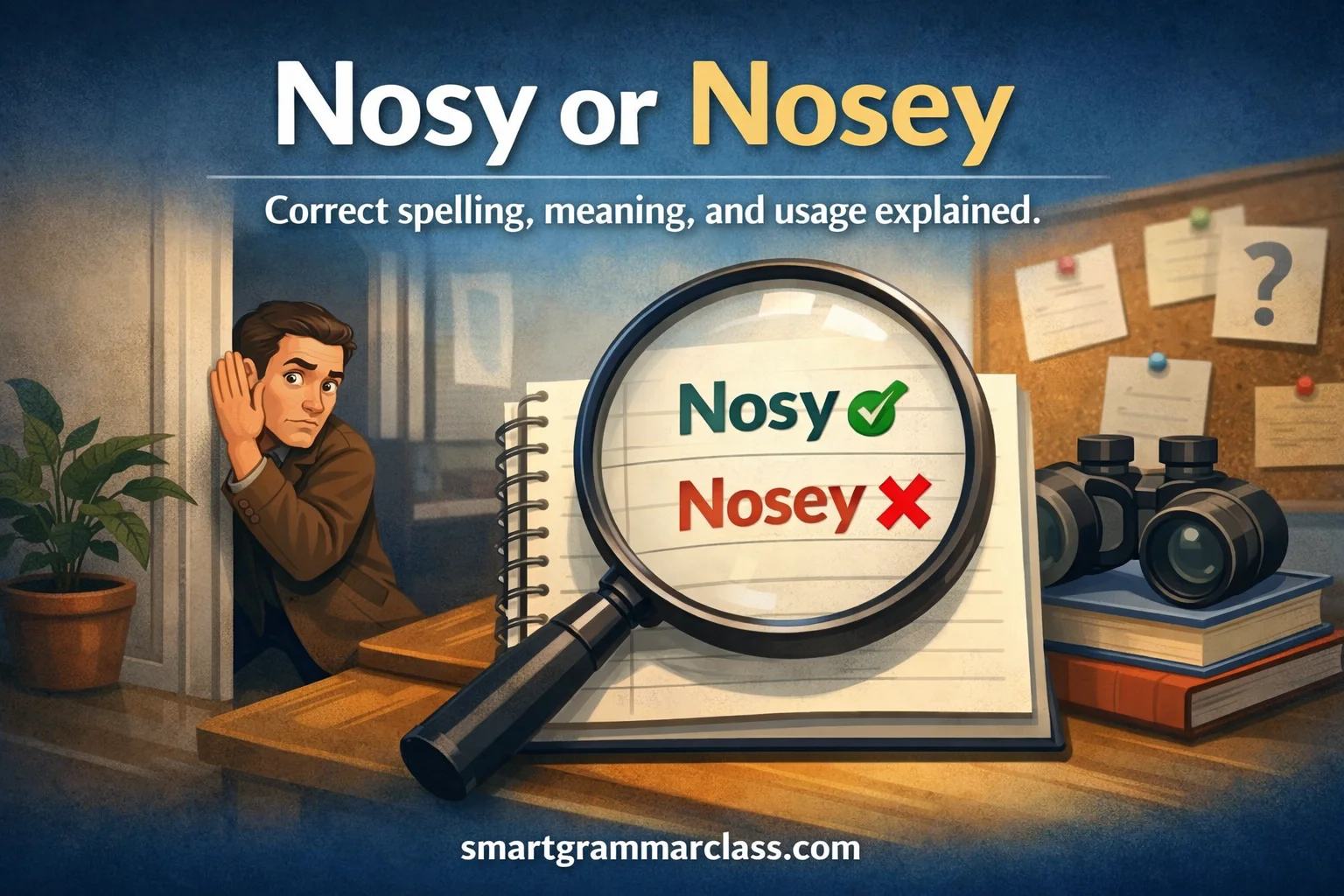
If you’ve ever typed “nosy or nosey” and wondered which one is right or wrong, you’re not alone—thousands of people search this every month because it’s a confusing word. Both versions exist, but the correct spelling most commonly used in modern English is nosy, especially in American English, where it is the recognized standard in dictionaries.
The meaning stays the same: someone who is curious, even prying, about others’ business or private affairs. I’ve personally seen both spellings used without much thinking, but using nosy keeps your writing cleanly aligned with style guides and avoids unnecessary confusion for learners, students, and even professionals.
The truth is, usage often depends on geography, audience, and style. While nosey is a valid variant, it is rarely preferred and sometimes linked to British spelling or older contexts. This debate exemplifies how English spelling variations can create doubt, but the key is consistency. Whether you’re writing emails, blogs, or social media posts, your choices directly impact communication effectiveness.
Good grammar resources suggest focusing less on memorizing every variation and more on understanding what your region prefers. This guide aims to clear that doubt, offering quick answer, everyday examples, and critical insight so you can walk away knowing what truly matters—using the acceptable spellings with precision and clarity in your writing.
Also read this : Bougie or Boujee: Correct Spelling and Meaning 2026
Quick Answer: Nosy or Nosey?
Let’s not waste your time.
- “Nosy” is the correct and preferred spelling
- “Nosey” exists but is outdated and rarely used
- Both words mean the same thing
If you’re writing anything today then use “nosy” every time.
That’s the short version. Now let’s unpack it properly.
What Does “Nosy” Actually Mean?
At its core “nosy” describes someone who pokes into things that aren’t their business.
It’s not always harsh. Sometimes it’s playful. Other times it feels invasive.
Here’s a simple way to think about it:
- Curious asks questions
- Nosy crosses boundaries
Real-Life Example
Imagine this situation.
You’re talking on the phone. A coworker leans in and listens closely. Then they ask who you were speaking with and what it was about.
That’s not curiosity. That’s nosy behavior.
Tone Matters
“Nosy” can shift depending on how you use it:
- Light tone → teasing a friend
- Neutral tone → describing behavior
- Negative tone → calling someone intrusive
So context changes everything.
Where Did “Nosy” Come From?
Here’s where things get interesting.
The word comes from “nose”. Not literally your nose but the idea of sticking it into things.
Back in older English people used phrases like:
- “to nose around”
- “to poke one’s nose into something”
Over time that evolved into “nosy”.
Why Two Spellings Exist
Language doesn’t evolve neatly. People spelled words based on how they sounded.
So both forms appeared:
- Nosy → simplified modern spelling
- Nosey → older phonetic variation
Eventually usage settled. “Nosy” won.
Nosy vs Nosey: What’s the Real Difference?
Let’s be clear.
There is no difference in meaning. None at all.
The difference is acceptance.
Side-by-Side Comparison
| Feature | Nosy | Nosey |
| Meaning | Intrusive curiosity | Intrusive curiosity |
| Modern usage | Very common | Rare |
| Preferred in US English | Yes | No |
| Recommended for writing | Yes | No |
| Seen in dictionaries | Yes | Sometimes |
What This Means for You
If you use “nosey” people may not call it wrong. Still it signals outdated or inconsistent writing.
That’s not what you want.
American vs British Usage of Nosy or Nosey
Now you might wonder if geography changes things.
Short answer. Not much.
American English
- Strongly prefers nosy
- “Nosey” almost never appears in professional writing
British English
- Occasionally uses “nosey”
- Still leans toward nosy in modern usage
Why Consistency Matters
Search engines favor consistency. Readers trust clarity.
If your writing switches between spellings it feels sloppy. Even if the meaning stays the same.
Stick with one form. That form is nosy.
When Should You Use “Nosy”?
This is where things become practical.
You can use “nosy” almost anywhere. Just match the tone to the situation.
Common Use Cases
- Everyday conversations
- Blog writing
- Social media posts
- Informal business communication
Examples That Sound Natural
- “I didn’t mean to be nosy but I was curious.”
- “She gets a little nosy about personal stuff.”
- “Don’t be nosy. It’s not your concern.”
Each one feels real. Nothing forced.
Common Mistakes People Make with Nosy or Nosey
Let’s clean up the errors that trip people up.
Mistake One: Thinking Both Are Equal
They’re not equal in modern usage.
“Nosy” dominates. “Nosey” lingers.
Mistake Two: Using “Nosey” in Professional Writing
This weakens credibility fast.
Editors notice. Readers notice too.
Mistake Three: Confusing Nosy with Curiosity
Not all curiosity is bad.
But “nosy” always leans toward intrusion.
Mistake Four: Overusing the Word
Calling everyone nosy can sound exaggerated.
Use it when it truly fits.
Nosy vs Curious: A Subtle but Important Difference
This distinction matters more than you think.
Quick Breakdown
| Trait | Curious | Nosy |
| Intent | Learning | Intruding |
| Tone | Positive | Negative or playful |
| Boundaries | Respects them | Crosses them |
Simple Examples
- Curious → “What inspired your career choice?”
- Nosy → “How much do you earn?”
See the shift?
One invites conversation. The other feels uncomfortable.
Real Usage Examples in Daily Life
Let’s bring this closer to home.
At Work
A colleague asks about your salary. That crosses a line.
That’s nosy.
In Friendships
A friend asks about your relationship once. That’s normal.
They keep pushing after you avoid the topic. Now it’s nosy.
In Families
Family members often blur boundaries.
- Asking about marriage plans → sometimes fine
- Repeating the question constantly → definitely nosy
Mini Case Study
Scenario: Office environment
Behavior: Employee checks others’ screens and asks about emails
Outcome: Team feels uncomfortable
Conclusion: Classic nosy behavior
Simple pattern. Easy to recognize.
Google Trends and Usage Data for Nosy vs Nosey
Data doesn’t lie.
Search behavior clearly favors one spelling.
Key Insights
- “Nosy” receives significantly higher search volume
- “Nosey” shows declining usage
- Content using “nosy” ranks better in search engines
What This Means
If you care about visibility then “nosy” is the only smart choice.
It aligns with how people search and read.
Is “Nosey” Ever Acceptable?
Technically yes.
Practically no.
Rare Situations Where It Might Appear
- Fiction dialogue to reflect character voice
- Personal writing with stylistic intent
- Older texts or quotes
Reality Check
Even in those cases “nosy” still works better.
So unless you have a strong reason just avoid “nosey”.
Final Verdict: Which Spelling Should You Choose?
Let’s settle this once and for all.
- Use nosy in all modern writing
- Avoid nosey unless you have a very specific reason
- Keep your spelling consistent
Simple rule. Big impact.
Quick Recap
Here’s everything boiled down.
- “Nosy” is the correct modern spelling
- “Nosey” is outdated and rarely used
- Both words mean intrusive curiosity
- Consistency improves clarity and trust
Short. Clear. Done.
Internal Linking Opportunities for SEO
If you’re building a content site then this topic connects naturally with other grammar guides.
Related Topics to Link
- Affect vs Effect
- Then vs Than
- Compliment vs Complement
Why This Matters
Internal links help readers stay longer.
They also signal structure to search engines.
That boosts rankings over time.
Content Strategy Insights That Actually Work
Here’s something most articles miss.
Ranking isn’t just about keywords. It’s about usefulness.
What Makes This Topic Perform Well
- Clear answer at the top
- Real examples instead of theory
- Simple explanations with depth
- Consistent keyword usage
Keyword Variations Used Naturally
- nosy or nosey
- correct spelling of nosy
- nosy meaning
- nosey vs nosy difference
These variations help search engines understand your content without stuffing keywords everywhere.
FAQs
Is nosy or nosey the correct spelling?
The correct spelling most widely accepted today is nosy, especially in American English. It is the recognized standard in most dictionaries, while nosey is considered a less common variant.
What does nosy actually mean?
The meaning of nosy refers to someone who is overly curious or prying into others’ business or private affairs. It often has a slightly negative tone in everyday use.
Why do both nosy and nosey exist?
Both versions exist because of English spelling variations that developed over time. The usage can depend on geography, style, and sometimes older British spelling influences.
Is it wrong to use nosey in writing?
It is not completely wrong, as nosey is a valid variant, but it is rarely preferred in modern English. Using nosy helps maintain clarity and avoids confusion, especially for learners and professionals.
Which spelling should I use in professional writing?
For emails, blogs, and social media, it is best to stay consistent and use nosy. This choice aligns with most style guides and improves overall communication effectiveness.
Conclusion
In the end, understanding nosy or nosey comes down to choosing the correct spelling and using it with consistency in your writing. While both forms exist, nosy is the more recognized standard in modern English, especially in American English, and helps avoid confusion for your audience. The meaning remains the same—someone too curious about others’ business—but your spelling choice can affect clarity and overall communication effectiveness. By focusing on what your region prefers and following trusted style guides, you can write with more precision and confidence in 2026 and beyond.

Mia Rose is a dedicated grammar expert and language educator committed to helping learners master English with clarity and confidence. With extensive experience in teaching grammar, writing, and communication skills, she specializes in turning complex language rules into simple, easy-to-understand lessons.
At Smart Grammar Class, Mia creates accurate, well-researched, and practical content tailored for students, professionals, and everyday learners. Her teaching style focuses on real-world examples and clear explanations, enabling readers to confidently apply grammar rules in both writing and speaking.
Mia is committed to maintaining high editorial standards, ensuring every piece of content is reliable, up-to-date, and aligned with modern English usage. Her mission is to make grammar accessible, engaging, and useful for learners at all levels.