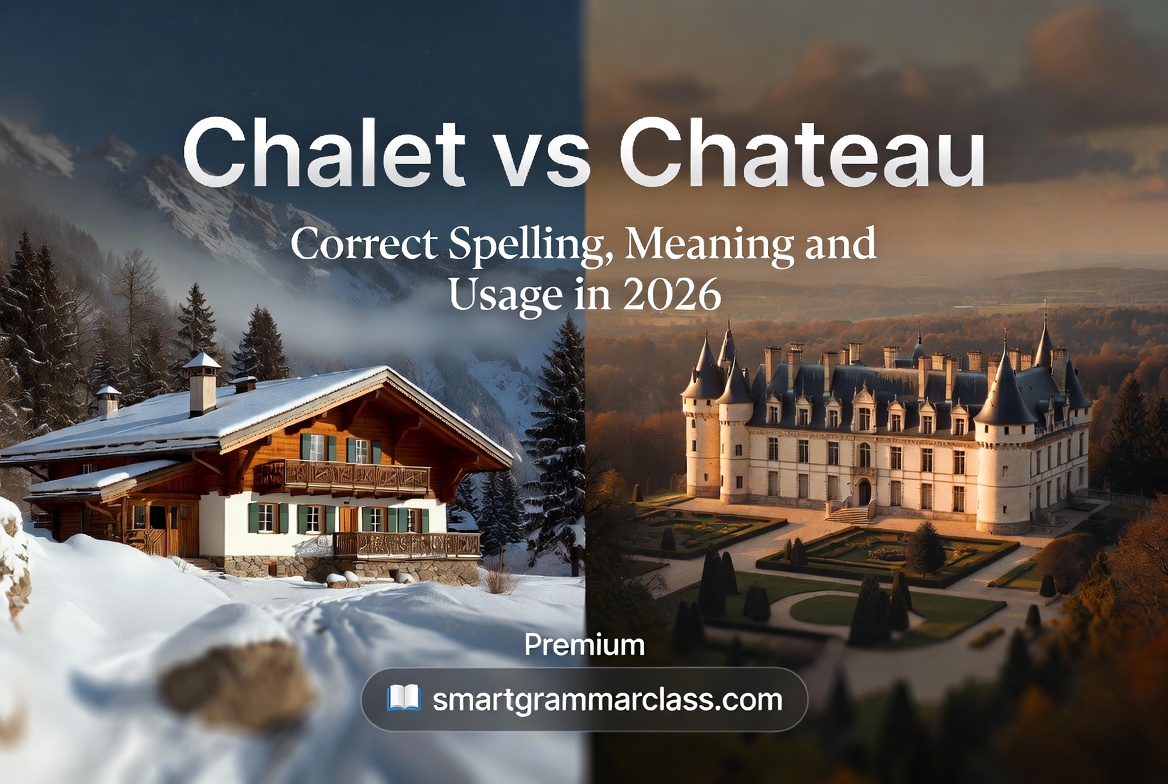
Many writers confuse chalet and chateau because both are popular French words. Understanding the correct spelling, meaning, and usage helps improve English vocabulary and communication. This word comparison provides a clear explanation of their distinct differences and contexts.
A chalet usually describes a mountain house with alpine charm and comfort. A chateau often refers to a French country house, grand estate, or historic residence. Learning this word difference strengthens language learning, English usage, and everyday vocabulary skills.
Whether reading travel writing, lifestyle content, or luxury listings, choosing the proper word matters. A chalet accommodation may offer a cozy retreat during an alpine vacation or ski trip. In contrast, chateau accommodation often highlights French architecture, gardens and grounds, and historic grandeur.
This grammar guide explores chalet meaning, chateau meaning, definitions, examples, sentence usage, and pronunciation. You will also discover context clues, memory tricks, mistakes to avoid, and practical word choice tips. By the end, making an informed decision between these commonly confused words becomes much easier.
Also read this: Traunch vs Tranche: Correct Spelling, Meaning, and Usage in 2026
Chalet vs Chateau: The Core Difference
The fastest way to separate these two words is by picture.
A chalet usually brings to mind a wooden mountain home, often in a snowy setting. Think of ski slopes, pine trees, warm interiors, and a place built for cold weather.
A chateau usually brings to mind a grand French estate, often made of stone and surrounded by land, gardens, or vineyards. Think of old-world elegance, wine country, and a sense of history.
That is the heart of the distinction.
| Word | Main Meaning | Common Setting | Typical Look | Common Use Today |
| Chalet | Alpine-style house or lodge | Mountains, ski resorts, rural highlands | Wood, sloped roof, cozy design | Vacation homes, ski lodges, mountain stays |
| Chateau | Large French estate or manor | France, vineyards, countryside | Stone, formal architecture, grand grounds | Historic estates, wine properties, luxury homes |
The words are both borrowed from French, but their everyday meanings have drifted into different lanes. That is why context matters so much.
What Is a Chalet?
A chalet is traditionally a wooden house or lodge found in mountain regions, especially in Alpine areas. The original chalet was not a luxury trophy home. It was a practical building used by herders and farmers in the mountains.
Over time, the word picked up a more modern travel meaning. Today, people often use chalet for ski lodges, holiday cabins, and mountain retreats. In many places, especially in tourism, it suggests a cozy, rustic, wood-heavy home with a roof designed to shed snow.
Chalet meaning in simple terms
A chalet is usually:
- A mountain-style home
- Made with wood or wood-heavy materials
- Built for snowy or cold climates
- Often used as a vacation stay or ski lodge
Common chalet features
A traditional or modern chalet often includes:
- Sloped roofs
- Wide eaves
- Timber walls or exposed wood
- Balconies
- Warm interiors
- A design that handles snow well
That sloped roof is not there just for style. It helps snow slide off instead of piling up. In mountain weather, that is practical engineering, not decoration.
Where the word chalet comes from
The word traces back to the French-speaking Alpine world. Historically, it referred to a shepherd’s hut or mountain shelter. The original meaning was tied to seasonal use and livestock management. The modern meaning is broader, but that mountain connection still stays strong.
A chalet is not just any cabin
People sometimes use chalet as a fancy word for “cabin.” That is not always accurate. A cabin can be many things. It might sit in the woods, near a lake, or on a remote trail. A chalet has a stronger association with mountain life and Alpine-style architecture.
What Is a Chateau?
A chateau is a large French country house, manor, or estate. In English usage, the word often suggests a grand historic property. It may be a palace-like residence, a noble estate, or a vineyard estate in France.
The key point is this: a chateau is not mainly about mountains. It is about estate living, French heritage, and often formal architecture.
Chateau meaning in simple terms
A chateau is usually:
- A large and elegant estate
- Associated with France or French style
- Built with stone or masonry
- Linked to nobility, history, or wine production
Common chateau features
A chateau often includes:
- Large grounds
- Formal architecture
- Towers, turrets, or decorative facades in some cases
- Stone construction
- Historical significance
- Vineyards or agricultural land in some regions
Not every chateau looks like a fairy tale castle. Some are modest by aristocratic standards. Others are massive and ornate. The main idea is not “castle” in the fantasy sense. The main idea is a French estate with status, history, and scale.
Chateau in modern usage
Today, people use the word chateau in several ways:
- To describe historic French estates
- To name wine properties, especially in Bordeaux
- To market luxury homes or hotels
- To evoke elegance and tradition
In wine culture, chateau has a very specific and important role. Many French wines use the term to identify the estate where the wine is made. That does not always mean a castle stands there. It often means the wine comes from a named property with vineyards and production facilities.
Chalet vs Chateau: Spelling and Pronunciation
The spelling difference looks small, but the meaning difference is huge.
- Chalet ends with -et
- Chateau ends with -eau
Pronunciation
In English, these words are often pronounced differently:
- Chalet sounds like “shah-LAY” or close to that
- Chateau sounds like “shah-TOH”
Even if pronunciation varies a little by speaker, the words remain distinct. Mixing them up can sound strange, especially in writing.
Easy memory trick
Here is a simple way to remember them:
- Chalet = Alps, Active snow life, A cozy mountain stay
- Chateau = Old France, Open estate land, Old-world elegance
That is not a formal rule. It is just a helpful memory tool.
How to Use Chalet in a Sentence
The word chalet works best when the setting suggests mountains, ski trips, or cozy lodge-style living.
Correct ways to use chalet
You can use chalet when talking about:
- A ski vacation
- A mountain home
- A rustic lodge
- A snowy retreat
- Alpine-style architecture
Example sentences with chalet
- We stayed in a chalet near the ski slopes.
- The chalet had wooden walls and a stone fireplace.
- They rented a chalet for their winter holiday.
- The resort offers private chalets with mountain views.
- Her family spends every February in a chalet in the Alps.
Why these sentences work
Each sentence gives the word the right environment. Snow, mountains, wood, and warmth all fit naturally with chalet. If you used the same word for a city townhouse or a vineyard estate, the sentence would start to wobble.
Chalet in travel writing
In travel content, chalet often signals:
- Comfort
- Privacy
- Scenic views
- Snow sports
- A warm and rustic setting
That is why resorts love the word. It carries mood. It sells a feeling as much as a building.
How to Use Chateau in a Sentence
The word chateau works best when the setting suggests France, estates, wine, history, or large elegant properties.
Correct ways to use chateau
You can use chateau when talking about:
- A French estate
- A vineyard property
- A historic manor
- A luxury residence
- A grand old building with formal grounds
Example sentences with chateau
- The winery owns a beautiful chateau in Bordeaux.
- They toured a 17th-century chateau during their trip to France.
- The chateau sits on land that has produced wine for generations.
- She booked a room in a restored chateau outside Paris.
- The family renovated the chateau into a boutique hotel.
Why these sentences work
The word fits because the setting feels French, historic, formal, and expansive. A chateau does not need to be a literal castle. It does need the feel of an estate or grand property.
Chateau in wine writing
Wine brands use the term carefully. It often points to the estate itself, not just the bottle. That is a big reason the word shows up so often on labels, tasting notes, and vineyard descriptions.
More Examples of Chalet vs Chateau in Real Sentences
Sometimes the easiest way to learn language is by seeing it in action.
Chalet examples
- The couple spent their honeymoon in a quiet chalet.
- Snow covered the roof of the chalet by morning.
- The mountain chalet had a hot tub on the deck.
- A small chalet stood at the edge of the forest.
- Their ski package included breakfast at the chalet.
Chateau examples
- The wedding took place at a restored chateau.
- The chateau overlooks rows of grapevines.
- Visitors explored the gardens of the old chateau.
- The family stayed at a countryside chateau for a week.
- The estate’s chateau dates back several centuries.
These examples show a pattern. Chalet feels active, snowy, and snug. Chateau feels stately, historic, and polished.
Common Mistakes to Avoid
Even people who know the words sometimes slip up. The most common mistakes are easy to spot.
Using chalet and chateau interchangeably
This is the biggest error. These are not general synonyms. They point to different kinds of places.
A mountain lodge is a chalet, not a chateau.
A vineyard estate is a chateau, not a chalet.
Treating both words as “fancy house”
That shortcut causes confusion. Yes, both sound elegant. No, they do not mean the same thing. A word’s tone does not define its meaning.
Ignoring cultural context
The words carry cultural weight. Chalet leans toward Alpine and ski culture. Chateau leans toward French history and estate culture. Skip that context and the usage can feel sloppy.
Overusing the words for marketing flair
Some listings use chalet or chateau just to sound luxurious. That can blur the meaning. A smart writer uses the word only when the setting actually fits.
Why People Confuse Chalet and Chateau
The confusion makes sense. The words share a few things:
- Both come from French
- Both appear in luxury travel writing
- Both can describe beautiful homes
- Both sound refined
But the differences still matter.
Similar sound, different meaning
The words are close enough that the ear can blur them. That happens a lot with borrowed terms. Once a foreign word enters English, pronunciation often shifts a little and meaning narrows in a new way.
Travel and real estate blur the line
Luxury marketing likes elegant language. A mountain villa may get called a chalet even when it is not a classic Alpine building. A historic home may get called a chateau because the word sounds more impressive than “house.”
That does not mean the words are interchangeable. It means marketing sometimes takes shortcuts.
People remember the mood, not the definition
A lot of people remember the vibe:
- Chalet = cozy
- Chateau = fancy
That is not enough. You need the actual context to choose correctly.
Context Matters More Than Style
If you are unsure which word to use, look at the setting first.
Accommodation
Use chalet for:
- Ski resorts
- Mountain rentals
- Alpine-style cabins
- Winter retreats
Use chateau for:
- Estate stays
- Historic country homes
- French-style luxury properties
- Vineyard accommodations
Architecture
Use chalet for:
- Wood-heavy construction
- Sloped roofs
- Mountain design
- Cozy lodges
Use chateau for:
- Stone or masonry buildings
- Formal estate architecture
- Large grounds
- Historic French style
Wine
Use chateau for:
- Vineyard estates
- Wine production properties
- French wine labels
- Estate-based branding
Use chalet rarely, and only if the building is truly a chalet in a mountain area. It does not belong in the wine world by default.
Tourism
Use chalet for:
- Ski holidays
- Mountain tourism
- Outdoor winter vacations
Use chateau for:
- Cultural tourism
- Heritage tours
- Wine country trips
- Historic estate visits
Exceptions and Gray Areas
Language is messy. There are always edge cases.
Modern chalet-style homes
Some homes are called chalets even if they are not in classic Alpine regions. The term may be used for style as much as location. Still, the design usually keeps mountain features like wood, steep roofs, and a rustic look.
Converted chateaus
Many chateaus no longer serve as private residences. They may become:
- Hotels
- Museums
- Event venues
- Wine tourism properties
That does not erase the word. It just changes the function while preserving the estate identity.
Regional language habits
In some places, people use these words loosely in commercial settings. A property developer may borrow the word chalet to imply comfort and charm. A hotel may use chateau to imply prestige. That is branding, not always strict vocabulary.
When writing carefully, it is better to follow the traditional meaning unless the local usage clearly points somewhere else.
Chalet vs Chateau in Travel Writing
Travel writing loves these two words because they create atmosphere fast.
When chalet works best
Use chalet when the story involves:
- Snow falling outside the window
- A fireplace in the corner
- Ski boots by the door
- Wooden balconies
- Mountain air
A chalet gives the reader a cozy picture in one word.
When chateau works best
Use chateau when the story involves:
- Vineyards stretching into the distance
- Formal gardens
- Historic rooms
- Stone facades
- French countryside charm
A chateau gives the reader a sense of heritage and grandeur.
A simple writing test
Ask yourself:
- Does the place feel like a mountain retreat? Use chalet.
- Does the place feel like a French estate? Use chateau.
That test solves most problems quickly.
Chalet vs Chateau in Real Estate Language
Real estate listings often use both words, but they should do so accurately.
Chalet in property language
A chalet listing usually suggests:
- A mountain property
- Vacation living
- Wood features
- Snow-friendly design
- A retreat atmosphere
Chateau in property language
A chateau listing usually suggests:
- A large estate
- A historic property
- French style
- Expansive grounds
- Luxury and prestige
Beware of inflated wording
Not every nice house is a chalet.
Not every big house is a chateau.
A good listing should match the building. Words lose power when they become hype instead of description.
Case Studies: Choosing the Right Word
Case study: a ski resort in Switzerland
A resort in the Swiss Alps offers timber lodges with fireplaces, mountain views, and direct access to the slopes. The correct term is chalet. The setting, materials, and use all fit.
Why not chateau? Because the property is not a French estate and the landscape is mountainous, not stately or vineyard-based.
Case study: a Bordeaux wine estate
A vineyard property in Bordeaux has a historic manor, wine cellars, and acres of vines. The correct term is chateau. The word fits both the estate and the wine tradition.
Why not chalet? Because the property is not a mountain lodge. The architecture and cultural context point in a different direction.
Case study: a luxury cabin in the Rockies
A marketing team calls a mountain cabin a chalet. That may be acceptable if the building has chalet-style features. But if the structure is just a standard log cabin with no Alpine design, the label becomes weaker.
Case study: a renovated French manor used as a hotel
If the building is a former noble estate in the French countryside, chateau still fits even if the property now hosts guests. The historical identity remains part of the word’s value.
Quick Rules to Remember
These rules are simple enough to keep in your head.
- Chalet = mountains, snow, wood, ski life
- Chateau = France, estates, wine, history
- Chalet is usually smaller and cozier
- Chateau is usually grander and more formal
- Chalet feels Alpine
- Chateau feels French and aristocratic
A good memory sentence helps too:
A chalet is a cozy mountain stay. A chateau is a grand French estate.
That one line covers the basics without overcomplicating things.
Practical Usage Tips for Writers and Editors
If you write content, especially travel, real estate, or lifestyle articles, these tips will help.
Check the setting first
Before using either word, ask:
- Where is the property?
- What does it look like?
- What is its historical background?
- What is its main function?
Match the word to the audience
Readers notice when language feels precise. They also notice when it feels random. Use the word that fits the actual place, not the one that merely sounds prettier.
Avoid lazy substitution
Do not swap in chalet or chateau just to avoid repeating “house,” “villa,” or “estate.” That creates confusion. Precision matters more than variety when the subject is specific.
Keep the tone natural
A simple sentence usually works best:
- The family stayed in a chalet during the ski season.
- The winery operates from a historic chateau.
Clear writing always wins over fancy writing that misses the mark.
Chalet vs Chateau: Final Comparison Table
| Aspect | Chalet | Chateau |
| Main association | Alpine mountain living | French estate living |
| Common setting | Ski resorts, mountain regions | Countryside, vineyards, France |
| Architecture | Wood, steep roofs, cozy design | Stone, formal estate design |
| Historical root | Shepherds’ shelters and mountain homes | Noble residences and estates |
| Modern use | Lodges, cabins, vacation homes | Wineries, hotels, historic homes |
| Best keyword context | Travel, skiing, mountain retreats | Wine, heritage, luxury estates |
This table gives the cleanest summary. If the scene feels snowy and rustic, think chalet. If it feels grand and French, think chateau.
FAQs
What Is the Main Difference Between a Chalet and a Chateau?
The chalet vs chateau comparison comes down to meaning, location difference, and purpose. A chalet is typically a mountain house or mountain retreat found in an alpine region, while a chateau is often a French estate, grand residence, or historic country house in the French countryside.
Which Is the Correct Spelling: Chalet or Chateau?
Both chalet and chateau are the correct spelling of different French words. Understanding their definitions, usage, and contextual meaning helps avoid spelling confusion and improves your English vocabulary and overall language usage.
When Should I Use the Word Chalet in a Sentence?
Use chalet when referring to a mountain accommodation, ski accommodation, or a cozy wooden house in mountain regions. In travel writing and travel terminology, it commonly describes a cozy retreat associated with skiing, winter vacation, and alpine vacation experiences.
What Does Chateau Mean in Travel and Property Contexts?
A chateau usually refers to a French country house, historic property, manor house, or luxury property featuring French architecture, gardens and grounds, and historic grandeur. It is often associated with luxury travel, hospitality, and elegant European lodging.
How Can I Remember the Difference Between Chalet and Chateau?
Simple memory tricks can help distinguish these commonly confused words. Think of a chalet as a rustic cabin with alpine charm for a dream vacation, while a chateau represents a grand estate, vineyard estate, or historic mansion known for its grandeur and luxurious stay.
Conclusion
In summary, understanding chalet vs chateau helps you choose the proper word with confidence and avoid commonly confused words. While a chalet typically refers to a mountain house or mountain accommodation known for alpine charm, a chateau describes a French country house, French estate, or grand estate with historic grandeur. Knowing their meaning, usage, definitions, and distinct differences improves English vocabulary, language learning, and everyday word choice. Whether reading travel writing, exploring luxury travel, or discussing property types, these French words become easier to recognize and use correctly in the right context.

mma Rose is a skilled grammar expert and language educator dedicated to helping learners improve their English with clarity and confidence. With extensive experience in teaching grammar, writing, and communication, she specializes in simplifying complex language rules into easy, practical explanations.
At Smart Grammar Class, Emma creates well-researched, accurate, and user-friendly content designed for students, professionals, and everyday learners. Her teaching approach focuses on real-life examples, clear structure, and actionable guidance, enabling readers to apply grammar rules effectively in both writing and speaking.
Emma is committed to maintaining high editorial standards, ensuring every article is trustworthy, up-to-date, and aligned with modern English usage. Her goal is to make grammar simple, accessible, and useful for everyone.