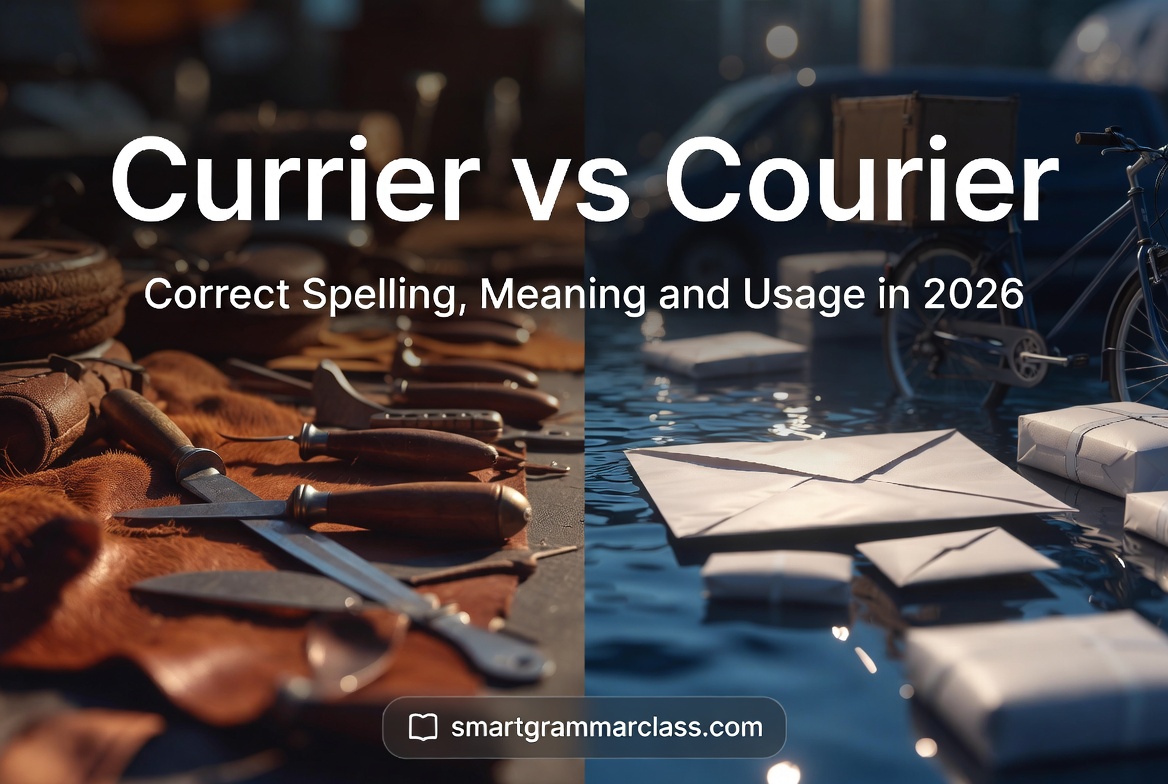
Many writers confuse currier and courier because they are similar sounding words. Understanding currier vs courier helps improve language skills and prevents common grammar errors. This guide explains the correct spelling, word meaning, and proper word usage in modern English.
Knowing the meaning differences between these commonly confused words supports better written communication and professional communication. Whether discussing a courier service or a leather worker, choosing the correct term improves message clarity. Strong English vocabulary and language accuracy depend on understanding these important spelling differences.
The courier definition refers to a messenger involved in package delivery, document delivery, and message delivery. In contrast, the currier definition describes a craftsman specializing in currying leather, tanning leather, and leather processing. Because context matters, these words are not interchangeable words despite similar pronunciation.
Through practical usage examples, example sentences, and clear definitions, readers can strengthen communication skills and language learning. This article also explores dictionary meaning, word comparison, and understanding context for effective everyday language and professional settings. By mastering this word distinction, you can avoid confusion, avoid mistakes, and achieve clearer written language.
Also read this: Pentoxide vs Pentaoxide: Correct Spelling, Meaning, and Usage in 2026
Currier vs Courier at a Glance
Before going deep, here is the fastest way to separate them.
| Word | Meaning | Modern Use | Common Today? | Best Memory Cue |
| Currier | A worker who dresses and finishes leather | Historical or specialized | Rare | Think curing leather |
| Courier | A messenger or delivery person | Shipping, logistics, messaging | Very common | Think carrying messages |
A simple rule helps a lot:
- Currier deals with leather.
- Courier deals with delivery.
That is the whole battle in one clean line.
What Does Currier Mean in Currier vs Courier?
Currier is the less common word, but it has a very specific meaning. A currier is a person who prepares and finishes leather after tanning. In older trades, this work mattered a great deal because leather needed cleaning, smoothing, dyeing, and polishing before it could become useful goods.
The word comes from an older craft world. People used it in trade settings long before modern shipping apps and same-day delivery. Today, you are far more likely to see it in historical writing, dictionaries, or discussions about traditional occupations.
Currier Definition and Origin
A currier is someone who works on leather to improve its appearance and durability. The job often comes after tanning. The leather may be softened, strengthened, colored, or given a polished finish.
That makes currier a trade word. It belongs to the same family as older occupational terms that describe very specific labor. The word survives mostly because history survives. Writers still need it when they talk about old crafts or specialized professions.
Why Currier Is Rare in Modern Writing
In everyday life, most people never need currier. That is why the word causes confusion. It looks close to courier. However, the meanings do not overlap much.
You will usually see currier in:
- historical texts
- museum descriptions
- leathercraft references
- occupational history
- old records or archives
A modern reader might pass over it without noticing. Still, that does not make it wrong. It simply means the word has a narrow job.
Currier in a Sentence
Here are clear examples of correct usage:
- The currier softened the leather before it went to the shoemaker.
- In the old town records, the currier worked near the tannery.
- The museum displayed tools used by a currier in the nineteenth century.
Each sentence ties the word to leather. That is the clue.
What Does Courier Mean in Currier vs Courier?
Courier is the word most people mean in modern life. A courier delivers packages, documents, or messages. The job can involve bikes, vans, planes, or digital systems. In some cases, the word also describes a delivery service itself.
This word is common because delivery is common. People order food. They ship products. They send legal papers. They track parcels. In all those situations, courier fits naturally.
Courier Definition and Origin
A courier is a messenger or delivery person. The word can refer to a person, a service, or a company that transports items quickly and reliably.
The term has deep roots, but its modern meaning is easy to understand. A courier carries something from one place to another. That can be a package, a letter, a confidential file, or even a medical sample.
Modern Uses of Courier
Unlike currier, courier remains highly active in daily language. You will see it in:
- shipping and logistics
- e-commerce
- legal document delivery
- restaurant delivery services
- travel and business communication
It is one of those words that feels ordinary because people use it all the time.
Courier in a Sentence
These examples show standard usage:
- The courier delivered the package before noon.
- We sent the signed contract by courier.
- The company hired a courier service for urgent documents.
Every sentence involves transport or delivery. That is the pattern.
Currier vs Courier: The Real Difference
The real difference is simple once you zoom out. Currier is about leathercraft. Courier is about delivery.
That sounds obvious after the fact. Still, many writers slip because the words differ by only one letter. When you type quickly or rely on autocorrect, the wrong choice can sneak in.
Meaning Difference Breakdown
| Aspect | Currier | Courier |
| Core meaning | Leather worker | Messenger or delivery person |
| Industry | Craft and tanning | Logistics and transport |
| Frequency in modern writing | Low | High |
| Common context | Historical trade | Business and daily life |
| Easy clue | Leather | Delivery |
This table shows why context matters. If the sentence talks about leather, currier is the likely match. If it talks about parcels or messages, courier is the right word.
Pronunciation Difference
The two words can sound close in casual speech. That is part of the problem. In fast conversation, many people hear the first syllable and miss the spelling detail.
Here is the simple sound clue:
- Currier starts with the same sound as curry.
- Courier sounds more like cure-ee-er or koo-ree-er in common speech.
The exact pronunciation can vary a little by accent. Still, the meaning difference stays stable.
Why This Confuses So Many Writers
The confusion usually comes from one of three things:
- the spelling looks almost the same
- the words sound close
- many people know courier but have never seen currier
That last point matters most. When a word is rare, the brain fills in the familiar option. That is how spelling mistakes happen.
How To Use Currier vs Courier Correctly in Sentences
Using the right word is not hard once you focus on context. Ask a simple question before you write: Is this about leather or delivery?
If the sentence is about leatherworking, choose currier. If the sentence is about transport, choose courier.
How To Use Currier in a Sentence
Use currier when the sentence refers to leather finishing, historical occupations, or traditional crafts.
Good examples include:
- The currier treated the leather with oil and polish.
- A skilled currier could improve the look and feel of coarse hides.
- The old workshop hired a currier to finish the leather straps.
These sentences sound natural because they match the word’s meaning.
How To Use Courier in a Sentence
Use courier when the sentence refers to delivery, dispatch, or fast transport.
Good examples include:
- The courier picked up the envelope at 2 p.m.
- We used a courier to send the legal papers across town.
- The restaurant works with a local courier network.
The meaning stays clear because the sentence centers on movement and delivery.
Examples of Currier vs Courier in Real Contexts
Examples make the difference stick. Seeing both words in use helps the brain connect spelling with meaning.
Examples of Currier in Sentences
- The currier worked on the leather until it turned smooth and dark.
- Historians often mention the currier when they describe old craft districts.
- The leather shop hired a currier to prepare premium hides.
- In older towns, the currier was an important part of the leather trade.
- The apprentice learned how a currier finishes leather before stitching begins.
These examples all point to one world: leather and craftsmanship.
Examples of Courier in Sentences
- The courier arrived with the package right on schedule.
- Our office sends urgent files by courier when speed matters.
- The medical courier transported samples to the lab.
- She called a courier service for the signed documents.
- The company uses a same-day courier for high-priority deliveries.
These examples all point to another world: delivery and transport.
Case Studies: How the Wrong Word Changes Meaning
Sometimes the difference looks small on paper but causes real confusion in practice. These short case studies show how.
Case Study: A Business Email Mix-Up
A small business once wrote, “Please send the contract by currier.”
The sentence looked fine at first glance. However, the word choice was wrong. The company did not need a leather worker. It needed a courier.
That single letter mattered. A client unfamiliar with the typo might still understand the request. Still, the mistake made the message look careless. In professional writing, that can weaken trust fast.
Lesson: When the message involves delivery or shipping, courier is the correct word.
Case Study: A History Assignment
A student wrote, “The town employed a courier to finish saddles.”
That sentence also missed the mark. Finishing saddles is leatherwork. The proper word was currier.
This mistake is more than a spelling issue. It changes the occupation entirely. A courier delivers items. A currier works on leather.
Lesson: When the job involves leather finishing, currier is the correct word.
Common Mistakes To Avoid When Using Currier and Courier
Most errors fall into a few predictable patterns. Once you know them, they are easy to avoid.
Using Currier Instead of Courier
This is the most common mistake. People see the letters, type fast, and choose the wrong one by habit.
It happens because courier is the familiar term in modern life. The brain may not pause long enough to check the meaning. The result is a sentence that looks almost right but lands wrong.
Bad example:
- Please contact the currier for overnight delivery.
Correct version:
- Please contact the courier for overnight delivery.
Using Courier Instead of Currier
This mistake is less common but still possible in historical or craft-related writing.
Bad example:
- The courier treated the hides before making the leather bags.
Correct version:
- The currier treated the hides before making the leather bags.
Not Knowing the Difference
Sometimes the issue is not typing. It is simple uncertainty. The writer knows one word sounds right but does not know which one applies.
That is why context matters so much. Once you identify the subject, the spelling becomes easier.
Tips To Avoid Confusion
A few practical habits can stop this mistake before it happens.
Use a Memory Trick
Try this:
- Currier = cure leather
- Courier = carry messages
That little trick works because both words hint at their roles.
Check the Context First
Ask yourself:
- Is this about leather or trade history?
- Is this about shipping or delivery?
- Is this about a messenger or package?
If the answer involves transport, choose courier. If it involves leather, choose currier.
Read the Sentence Out Loud
This sounds simple but it helps. When you read the sentence aloud, the meaning often becomes obvious.
Example:
- “The currier delivered the package.”
That sounds odd because a leather worker does not deliver packages. The wrong word stands out when you hear it.
Look at the Job, Not Just the Letters
When two words look alike, spelling alone can mislead you. Meaning should lead the choice. That is the safer habit.
Exceptions and Edge Cases in Currier vs Courier
Every language topic has a few edge cases. This one does too.
Historical Usage
Currier appears in older records, dictionaries, and trade histories. In those settings, the word is correct and expected.
That means a sentence can look old-fashioned without being wrong. Historical context gives the word a proper home.
Regional Differences
There is no major modern regional split that changes the basic meanings. The core distinction stays the same in standard English.
Still, older materials from different regions may use currier more often because leather trades once played a bigger role in local economies.
Industry-Specific Usage
Some niche industries still use currier when they discuss leather finishing in detail. That usage is specialized rather than common.
By contrast, courier appears across many industries, including:
- logistics
- medicine
- law
- retail
- food delivery
That wider reach makes courier the word most people encounter.
Word History Made Simple
A little background helps the difference stick.
Currier comes from the world of leather processing. The term reflects an older economy where people depended on skilled hand labor.
Courier comes from a word history tied to messengers and travel. The modern version expanded into package delivery and service networks.
The path of each word explains the confusion. They sound close because language evolved in layers. However, their meanings split long ago.
That is why this pair can trip up even careful writers.
Quick Comparison Table for Fast Review
Here is the cleanest side-by-side snapshot.
| Feature | Currier | Courier |
| Spelling | One “r” after “cu” and one “r” in the middle | Starts with “cou” |
| Meaning | Leather finisher | Messenger or delivery service |
| Modern frequency | Rare | Very common |
| Main context | Historical and craft | Business and daily life |
| Easy association | Leather and tanning | Packages and messages |
| Risk of confusion | High because of spelling | High because it is so common |
This table is useful when you need a fast mental reset.
Practice Exercises
Try these quick exercises to test your understanding.
Fill in the Blank
Choose the correct word.
- The ______ delivered the documents before the deadline.
- The ______ polished the leather before it was made into boots.
- We called a ______ service for the urgent parcel.
- The old museum described the tools used by a ______.
Sentence Completion
Finish each sentence with the right word.
- The shop hired a ______ to finish the saddles.
- The company sent the contract by ______.
- The ______ arrived with the package at noon.
- The leatherworker was known as a skilled ______.
Answer Key
- courier
- currier
- courier
- currier
- currier
- courier
- courier
- currier
If you got all of them right, the difference is starting to stick.
Why This Difference Still Matters in 2026
Language keeps changing but clarity still wins. In 2026, people write faster than ever. They send messages across business platforms, email, apps, and online forms. That speed makes small mistakes more visible.
Using currier when you mean courier can make a sentence look sloppy. Using courier when you mean currier can distort the meaning. Neither error helps the reader.
Good writing does not need fancy tricks. It needs precision. That is especially true with word pairs that look almost identical.
Best Way To Remember Currier vs Courier
The easiest memory rule is this:
- Currier = leather
- Courier = delivery
Another way to lock it in:
- A currier cures or finishes leather.
- A courier carries items.
That gives you two mental hooks instead of one. The result is better recall and fewer mistakes.
FAQ
What is the difference between Currier and Courier?
The main word distinction is that a courier is a messenger who handles package delivery, document delivery, and message delivery, while a currier is a leather worker involved in currying leather and leather processing. Understanding these meaning differences improves language accuracy and written communication.
Which is the correct spelling: Currier or Courier?
The correct spelling depends on the intended word meaning and contextual meaning. Use courier when referring to a courier service, delivery profession, or logistics, and use currier when referring to a craftsman working with animal hides, tanning leather, and leather preparation.
Why are Currier and Courier commonly confused words?
These terms are commonly confused words because they are homophones and similar sounding words with comparable pronunciation. However, context matters, and recognizing their different definitions helps avoid misspelling, avoid confusion, and strengthen communication skills.
What does Courier mean in professional settings?
In professional settings, the courier definition refers to a person or company providing delivery services, parcel delivery, package courier, document courier, and shipping services. These transportation services support efficient message delivery, goods transport, and modern delivery networks.
What does Currier mean in English vocabulary?
The currier definition refers to a leather craftsman, leather artisan, or leather tanning expert who prepares leather through currying leather, softening leather, and leather dressing. Learning this term expands English vocabulary, supports language learning, and improves understanding context in English usage.
Conclusion
Understanding currier vs courier is essential for choosing the correct spelling, improving word usage, and strengthening written communication. While a courier works in package delivery, document delivery, and logistics, a currier is a leather worker involved in currying leather and leather processing. Recognizing these meaning differences, definitions, and proper contextual meaning helps avoid confusion, improve language accuracy, and build stronger English vocabulary. By understanding the right word meaning and understanding context, you can communicate more clearly in both everyday language and professional settings.

Mia Rose is a dedicated grammar expert and language educator committed to helping learners master English with clarity and confidence. With extensive experience in teaching grammar, writing, and communication skills, she specializes in turning complex language rules into simple, easy-to-understand lessons.
At Smart Grammar Class, Mia creates accurate, well-researched, and practical content tailored for students, professionals, and everyday learners. Her teaching style focuses on real-world examples and clear explanations, enabling readers to confidently apply grammar rules in both writing and speaking.
Mia is committed to maintaining high editorial standards, ensuring every piece of content is reliable, up-to-date, and aligned with modern English usage. Her mission is to make grammar accessible, engaging, and useful for learners at all levels.