Have you ever paused mid-sentence, wondering which word to write: desert or dessert? You’re not alone. This tiny spelling difference confuses millions of people, especially in emails, essays, and social posts.
These words sound similar, but their meaning and usage are completely different. In this blog, I’ll keep things simple, breaking it down in a clear and friendly way so you can learn quick tricks to remember the correct word every time and avoid embarrassing mistakes.
Think of a restaurant where a server brings your dessert after dinner. You confidently take the chocolate cake you ordered, not a pile of sand. It sounds ridiculous, but this mix-up happens every day because one extra letter flips the meaning completely. A dessert is a sweet treat, often with whipped cream, while a desert is a dry, arid, hot place like the Sahara, a region with little rainfall, rocky soil, and vegetation.
As a noun, it describes a large, barren landscape, but as a verb, it can mean to leave or abandon without permission. A helpful tip is this easy mnemonic: dessert has two S because you always want more, while desert has one. This small memory trick builds confidence, improves writing, and helps you use words properly in any context or conversation.
Also read this: Dreamed or Dreamt: Correct Spelling, Meaning and Usage in 2026
Desert vs Dessert The Fastest Way to Tell Them Apart
If you only remember one thing from this guide make it this:
- Desert = dry place OR to abandon
- Dessert = sweet food after a meal
That’s it. Simple. Direct. Easy to recall.
Now let’s make it stick.
The Visual Difference
- Desert → one “s”
- Dessert → two “s” letters
That extra “s” matters. It signals sweetness. Think of it as an upgrade. More letters. More indulgence.
Quick Memory Trick
Dessert has two s’s because you always want seconds.
It sounds playful. It works like magic.
Quick Comparison Table
| Word | Meaning | Pronunciation | Example Sentence |
| Desert | Dry land or to abandon | DEZ-ert / dih-ZURT | The Sahara is a desert |
| Dessert | Sweet course after a meal | dih-ZURT | I ordered cheesecake for dessert |
Keep this table in mind. It clears confusion instantly.
What Does “Desert” Mean?
The word desert carries two main meanings. Both show up often in real life.
Desert as a Noun: A Dry Landscape
A desert is a place with very little rainfall. It often features extreme temperatures. Sand dunes. Sparse vegetation.
Famous examples include:
- Sahara Desert in Africa
- Arabian Desert in the Middle East
- Mojave Desert in the United States
These environments look harsh. They demand resilience.
Example sentence:
The camel crossed the desert without water for days.
Desert as a Verb: To Abandon
This version of desert has nothing to do with sand. It means to leave someone behind. Often in a serious or emotional context.
Example uses:
- A soldier deserts the army
- A friend deserts you in a tough moment
Example sentence:
He deserted his team right before the final match.
Same spelling. Totally different meaning. Context does all the work here.
What Does “Dessert” Mean?
Now let’s talk about the fun one.
Dessert refers to the sweet course served after a meal. It’s often the highlight. The reward. The reason people save room.
Common Types of Desserts
- Cakes and pastries
- Ice cream and gelato
- Puddings and custards
- Cookies and brownies
- Fruit-based dishes
Example Sentence
She ordered chocolate lava cake for dessert.
Why the Double “S”?
The spelling comes from French roots. The extra “s” isn’t random. It reflects the word’s origin and pronunciation evolution.
But honestly. Most people remember it because dessert feels bigger. Richer. More indulgent. That extra letter fits the vibe.
Pronunciation Breakdown: Say It Right Every Time
Spelling matters. Pronunciation matters too.
Let’s simplify it.
Desert (noun)
- Pronounced: DEZ-ert
- Stress on the first syllable
Desert (verb)
- Pronounced: dih-ZURT
- Stress shifts to the second syllable
Dessert
- Pronounced: dih-ZURT
- Sounds like the verb form of desert
Quick Tip
If it sounds like “dih-ZURT” and you’re talking about food you mean dessert.
Say it out loud a few times. It’ll lock in.
The Origin Story: Where These Words Come From
Words carry history. These two are no exception.
Desert Origin
- Comes from Latin “deserere”
- Meaning: to abandon
Over time it evolved into:
- A verb meaning to leave
- A noun describing abandoned land
That’s why deserts feel empty. The meaning connects.
Dessert Origin
- Comes from French “desservir”
- Meaning: to clear the table
After clearing the main course dessert follows. The name stuck.
Why This Matters
Understanding origins adds depth. It also helps memory. When you know the story the spelling feels logical.
British vs American English: Any Differences?
Here’s something refreshing.
There is no difference in spelling between British English and American English for these words.
- Desert stays desert
- Dessert stays dessert
No hidden variations. No alternate forms. What you learn works globally.
Pronunciation may vary slightly by accent. The core distinction stays the same.
Common Mistakes People Make And How to Avoid Them
Even experienced writers slip up. Let’s fix the most common errors.
Mixing the Spellings
Mistake:
I had desert after dinner.
Fix:
I had dessert after dinner.
Forgetting the Extra “S”
This happens a lot. People type fast. The second “s” disappears.
Solution:
Pause for one second. Ask yourself. Is it food or sand?
Misusing Desert as a Verb
Some confuse the meanings entirely.
Mistake:
He desserted the group.
Fix:
He deserted the group.
Quick Fix Strategy
- Identify the context
- Check the number of “s” letters
- Read the sentence out loud
It takes seconds. It prevents embarrassment.
Memory Tricks That Actually Work
Let’s go beyond basic tips. These techniques stick long term.
The “Two Scoops” Rule
Dessert has two “s” letters. Imagine two scoops of ice cream.
More scoops. More sweetness. More “s” letters.
The “Lonely Desert” Idea
Desert has one “s”. It’s lonely. Empty. Just like a dry landscape.
Visual Association
Picture this:
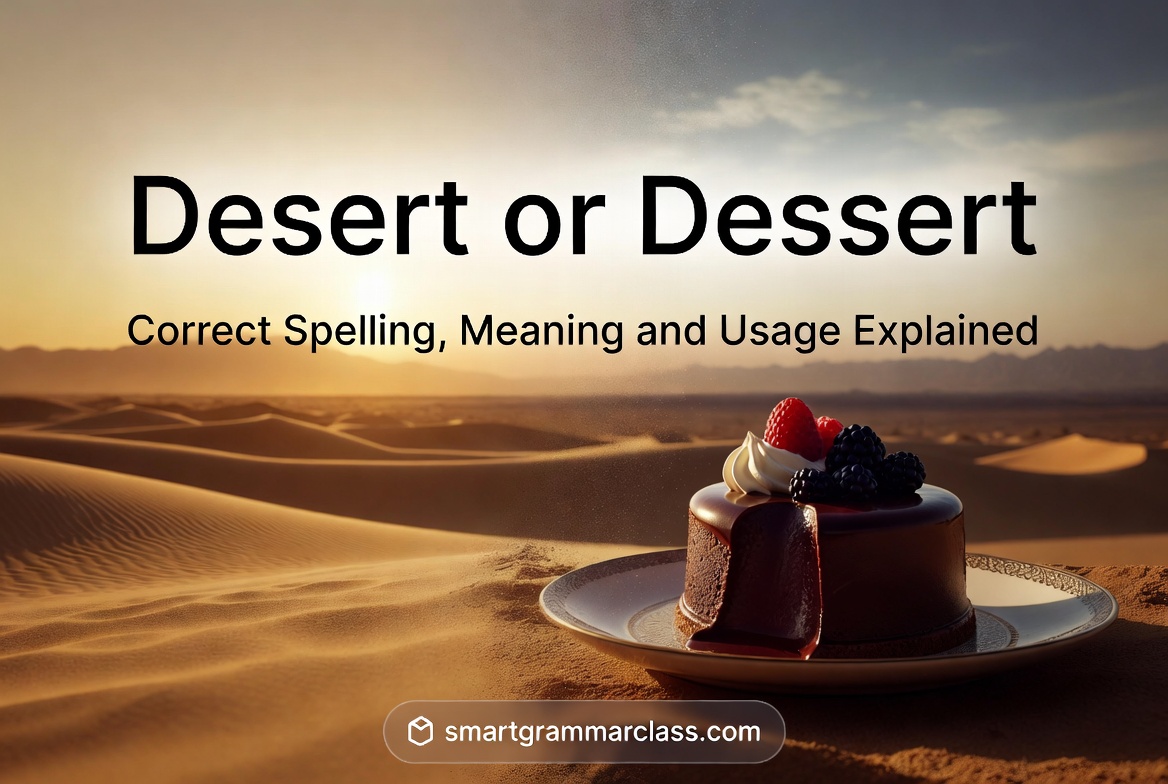
- Desert → sand dunes
- Dessert → chocolate cake
Your brain loves images. Use them.
Desert vs Dessert in Everyday Writing
You don’t just use these words in textbooks. They show up everywhere.
Emails
Correct:
Let’s meet for dessert after dinner.
Incorrect:
Let’s meet for desert after dinner.
That second version sounds like a survival mission.
Social Media
Short captions need clarity.
Example:
Nothing beats dessert on a Friday night.
Clean. Clear. No confusion.
Formal Writing
Professional content demands precision.
Example:
The Sahara is the largest hot desert in the world.
Accuracy matters here. No room for mistakes.
News Style Example
Correct:
The army reported that several soldiers attempted to desert their posts.
Different meaning. Same spelling. Context drives clarity.
Real-Life Examples That Make It Click
Let’s make this practical.
Restaurant Scenario
You say:
“I’ll have desert.”
The server pauses. You meant dessert. Now there’s confusion.
Travel Blog Example
“The desert stretched endlessly under the burning sun.”
Clear meaning. Strong imagery.
Academic Example
“Desert ecosystems require specialized adaptation strategies.”
Precise. Formal. Correct.
Casual Conversation
“I shouldn’t eat dessert every night but I do.”
Relatable. Honest. Accurate.
Desert vs Dessert in Popular Search Trends
Search data shows something interesting.
Thousands of people search “desert or dessert” every month. The confusion isn’t rare. It’s widespread.
Key Insight
- Most searches spike during school seasons
- Food-related content also drives confusion
This proves one thing. You’re not alone in mixing them up.
Usage Comparison Table
| Feature | Desert | Dessert |
| Part of Speech | Noun / Verb | Noun |
| Meaning | Dry land or abandon | Sweet dish |
| Origin | Latin | French |
| Context | Geography military writing | Food dining |
| Spelling Clue | One “s” | Two “s” letters |
Use this table as a quick reference.
When to Use Desert vs Dessert
Let’s simplify everything into a quick checklist.
Use “Desert” When:
- You describe dry land
- You talk about abandonment
- The sentence feels serious or environmental
Use “Dessert” When:
- You mention food
- You refer to sweets
- The context involves meals
Quick Test Sentences
Fill in the blanks:
- The ___ was scorching hot.
- I ordered ice cream for ___.
- He decided to ___ the mission.
Answers:
- Desert
- Dessert
- Desert
If you got those right you’re set.
Case Study: How One Mistake Changed Meaning
A small business once posted this online:
“Free desert with every meal.”
Customers showed up expecting cake. The restaurant meant dessert. Instead they created confusion and lost credibility.
What Went Wrong
- Missing second “s”
- No proofreading
- Miscommunication in marketing
Lesson
Small spelling errors create big problems. Especially in business.
Why This Topic Still Matters in 2026
You might think this is basic grammar. It’s not.
Clear communication builds trust. Whether you write emails or blogs or social posts you need accuracy.
Search engines also care. Correct spelling improves readability. It keeps users engaged. That boosts rankings over time.
So yes. Knowing desert vs dessert still matters. More than ever.
FAQs
What is the main difference between desert and dessert?
The difference is in their meaning and usage. A desert is a dry, arid, and hot place with little rainfall, while a dessert is a sweet course served after a meal.
Why do desert and dessert confuse so many people?
These words sound similar, and the spelling difference is very small, which confuses millions of people during writing or speech, especially under pressure.
How can I remember the correct spelling easily?
A simple mnemonic is that dessert has two S, meaning you want more of something delicious, while desert has one. This memory trick helps you choose the right word every time.
Can desert be used as both a noun and a verb?
Yes, as a noun, desert refers to a large, barren land. As a verb, it means to leave or abandon someone or something without permission, depending on the context.
Why is it important to use desert and dessert correctly?
Using the correct word avoids confusion and a breakdown in communication. A small mistake can change the entire meaning, especially in emails, essays, or social posts.
Conclusion
In the end, understanding desert vs dessert comes down to mastering their spelling, meaning, and usage in the right context. These two words may sound alike, but their difference is clear once you apply simple memory tricks like the two S rule for a sweet dessert. Avoiding this common confusion helps improve your writing, prevents embarrassing mistakes, and keeps your communication smooth and clear whether in emails, essays, or daily conversation.

Mia Rose is a dedicated grammar expert and language educator committed to helping learners master English with clarity and confidence. With extensive experience in teaching grammar, writing, and communication skills, she specializes in turning complex language rules into simple, easy-to-understand lessons.
At Smart Grammar Class, Mia creates accurate, well-researched, and practical content tailored for students, professionals, and everyday learners. Her teaching style focuses on real-world examples and clear explanations, enabling readers to confidently apply grammar rules in both writing and speaking.
Mia is committed to maintaining high editorial standards, ensuring every piece of content is reliable, up-to-date, and aligned with modern English usage. Her mission is to make grammar accessible, engaging, and useful for learners at all levels.