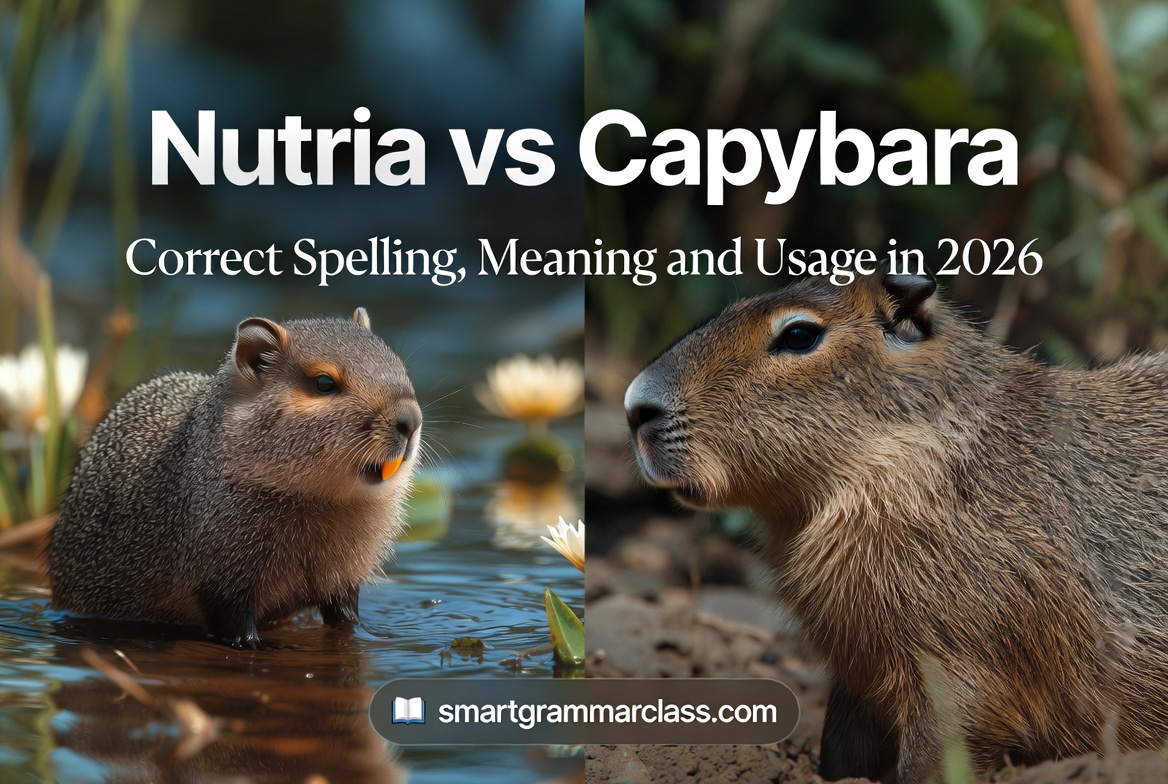
Understanding nutria vs capybara helps clarify common confusion among semi aquatic rodents. These nutria also known as coypu, and capybara belong to rodent family found wetlands. The capybara, considered largest rodent in the world, lives in South America wetlands regions.
Meanwhile nutria are North American introduced species known for wetland damage through burrowing animals. They show strong swimming ability and diving ability in aquatic lifestyle across rivers lakes water bodies.
A clear nutria vs capybara comparison highlights differences in size, behavior, and habitat. Physical appearance includes brown fur, large teeth, and webbed feet with tail differences. Capybara show social animals behavior, while nutria display reclusive nature and aggressive nutria behavior.
They feed on wetland plants, shaping diet, feeding habits, and ecosystem impact significantly. This rodent comparison guide helps identification, meaning, and distinguish animals in viral animal discussions.
Also read this: Eccentric vs Eclectic: Correct Spelling, Meaning, and Usage in 2026
What Is a Nutria?
A nutria is a large semi-aquatic rodent scientifically known as Myocastor coypus. Many people also call it a coypu. Native to South America, nutria later spread to North America, Europe, and parts of Asia because the fur industry imported them during the twentieth century.
Once fur farms collapsed, thousands of nutria escaped into the wild. Their populations exploded in marshes and wetlands where predators remained limited. Today wildlife agencies in many countries classify nutria as an invasive species.
Scientific Classification of Nutria
| Classification | Details |
| Scientific Name | Myocastor coypus |
| Family | Echimyidae |
| Native Region | South America |
| Average Weight | 15 to 22 pounds |
| Average Length | 16 to 24 inches body length |
| Lifespan | 3 to 6 years in the wild |
Nutria possess several physical traits that make identification easier.
Physical Appearance of Nutria
The first thing most people notice is the tail. Nutria have a long round rat-like tail. That feature instantly separates them from capybaras.
Other defining characteristics include:
- Bright orange front teeth
- Coarse brown fur
- Small ears
- White whiskers
- Webbed hind feet
- Compact body shape
Their orange teeth contain iron-rich enamel which strengthens the incisors. Those teeth never stop growing. Nutria constantly gnaw on plants to keep them trimmed.
Behavior and Lifestyle
Nutria spend much of their lives near freshwater habitats. Marshes, lakes, canals, and slow-moving rivers provide perfect living conditions.
Unlike capybaras, nutria usually form small family groups rather than massive social communities. They stay most active during dawn and dusk. In heavily populated areas they may become nocturnal to avoid humans.
Nutria eat enormous amounts of vegetation daily. A single adult can consume nearly 25 percent of its body weight in plants every day. That feeding habit creates severe environmental damage.
Why Nutria Are Considered Invasive
Few rodents damage ecosystems as aggressively as nutria. Their feeding habits destroy root systems that stabilize wetlands. Once vegetation disappears, soil erosion accelerates quickly.
Environmental problems linked to nutria include:
- Wetland collapse
- Agricultural crop destruction
- Riverbank erosion
- Water quality decline
- Habitat loss for native species
Several US states spend millions annually controlling nutria populations. Louisiana alone has battled nutria infestations for decades because the rodents threaten coastal marshes that protect communities from hurricanes.
What Is a Capybara?
The capybara is the world’s largest rodent. Scientifically known as Hydrochoerus hydrochaeris, this gentle giant lives throughout South America. Unlike nutria, capybaras enjoy widespread popularity because of their calm temperament and unusual social behavior.
Internet culture transformed capybaras into viral sensations. Photos of capybaras relaxing beside cats, birds, monkeys, and even crocodiles spread rapidly online. Their laid-back personality earned them a reputation as nature’s chillest animal.
Scientific Classification of Capybara
| Classification | Details |
| Scientific Name | Hydrochoerus hydrochaeris |
| Family | Caviidae |
| Native Region | South America |
| Average Weight | 77 to 150 pounds |
| Average Length | 3.5 to 4.5 feet |
| Lifespan | 8 to 10 years |
Capybaras belong to the same broader rodent group as guinea pigs. Despite their giant size they share several anatomical similarities with smaller cavies.
Physical Appearance of Capybara
Capybaras look very different from nutria once you examine them carefully.
Key features include:
- Barrel-shaped body
- Short almost invisible tail
- Blunt snout
- Small rounded ears
- Partially webbed feet
- Thick neck and chest
Adult capybaras can weigh more than 100 pounds. Some exceptionally large males approach 150 pounds in ideal environments.
Their eyes, ears, and nostrils sit near the top of the head. This adaptation allows capybaras to remain mostly submerged while still monitoring predators.
Social Behavior and Temperament
Capybaras thrive in groups. Wild communities often contain 10 to 20 individuals although larger gatherings occur during dry seasons.
Their social structure revolves around:
- Group protection
- Shared grazing
- Vocal communication
- Grooming behavior
- Cooperative warning systems
Capybaras communicate using whistles, barks, clicks, chirps, and purrs. Young capybaras stay close to adults who protect them from predators like jaguars, caimans, and anacondas.
Why Capybaras Became Popular Online
Capybaras exploded across social media because they appear unusually tolerant around other animals. Viral videos frequently show capybaras sitting calmly while ducks, monkeys, rabbits, and cats climb over them.
That calm personality created a cultural phenomenon.
People admire capybaras because they symbolize:
- Relaxation
- Friendliness
- Peaceful coexistence
- Emotional calmness
- Social adaptability
However online portrayals sometimes oversimplify reality. Capybaras still require specialized care and large aquatic habitats.
Nutria vs Capybara: Key Differences at a Glance
Although both species share semi-aquatic lifestyles, the differences become obvious when you compare them directly.
| Feature | Nutria | Capybara |
| Scientific Name | Myocastor coypus | Hydrochoerus hydrochaeris |
| Average Weight | 15–22 pounds | 77–150 pounds |
| Tail | Long and rat-like | Tiny and barely visible |
| Temperament | Nervous and defensive | Calm and social |
| Habitat | Wetlands and marshes | Grasslands and rivers |
| Social Structure | Small groups | Large social herds |
| Diet | Aquatic plants and roots | Grass and vegetation |
| Ecological Impact | Highly invasive | Native ecosystem grazer |
| Lifespan | 3–6 years | 8–10 years |
One glance at the tail often settles the nutria vs capybara debate instantly.
How To Tell a Nutria From a Capybara
People frequently misidentify these rodents in photos and videos. Fortunately several clues simplify identification.
Look at the Tail First
This remains the easiest method.
- Nutria have a long skinny tail
- Capybaras have almost no visible tail
If you spot a rodent with a rat-like tail near water, you are likely looking at a nutria.
Compare Their Size
Capybaras dwarf nutria.
An adult capybara can weigh over 100 pounds while nutria usually stay below 25 pounds. Standing beside each other, the difference becomes dramatic.
Examine Facial Features
Nutria feature sharper facial lines and prominent orange teeth. Capybaras possess wider snouts and softer facial features.
Their expressions differ too.
Nutria often appear alert or tense while capybaras usually look relaxed.
Observe Their Behavior
Behavior provides another excellent clue.
Nutria tend to:
- Scatter quickly
- Avoid large gatherings
- Defend territory aggressively
Capybaras often:
- Rest together peacefully
- Remain calm around animals
- Swim socially
Habitat Differences Between Nutria and Capybara
Although both species depend heavily on water, their preferred environments differ significantly.
Where Nutria Live
Nutria adapt extremely well to disturbed ecosystems. They thrive in:
- Swamps
- Drainage canals
- Wetlands
- Irrigation systems
- Urban waterways
Their adaptability partly explains why they became invasive worldwide.
Nutria tolerate cooler climates better than capybaras. Populations survive in parts of North America and Europe with cold winters.
Where Capybaras Live
Capybaras prefer tropical and subtropical environments. They usually inhabit:
- Flooded savannas
- Riverbanks
- Tropical wetlands
- Grasslands near water
Countries with large wild capybara populations include:
- Brazil
- Venezuela
- Colombia
- Argentina
- Paraguay
Water plays a crucial role in capybara survival because it provides escape routes from predators.
Climate Adaptation Differences
Capybaras struggle in freezing conditions because they evolved in warmer climates. Nutria show greater cold tolerance although harsh winters can still reduce populations.
This climate difference affects global distribution dramatically.
Diet Comparison Between Nutria and Capybara
Diet shapes how each animal interacts with ecosystems.
What Nutria Eat
Nutria aggressively consume wetland vegetation.
Their diet includes:
- Roots
- Reed stems
- Aquatic grasses
- Crops
- Bark
Unlike capybaras, nutria often dig up entire plants including root systems. That behavior destroys marsh stability.
What Capybaras Eat
Capybaras function more like giant grazing herbivores.
Common foods include:
- Grass
- Aquatic plants
- Fruit
- Tree bark
- Shrubs
Capybaras may eat their own feces to improve nutrient absorption. This behavior sounds unpleasant yet many herbivores use it to digest tough plant fibers efficiently.
Feeding Habits Compared
Nutria feeding causes greater environmental destruction because they uproot vegetation entirely. Capybaras graze more naturally without devastating root systems.
That difference explains why one species supports ecosystems while the other threatens them.
Temperament and Human Interaction
Temperament creates another major distinction in the nutria vs capybara discussion.
Are Nutria Dangerous?
Nutria rarely attack humans unprovoked although cornered individuals can become aggressive.
Potential risks include:
- Deep bites
- Scratches
- Property damage
- Disease transmission
Nutria can carry parasites and bacteria associated with contaminated water environments.
Their sharp incisors inflict serious injuries if handled improperly.
Are Capybaras Friendly?
Capybaras generally display calmer behavior. They tolerate human presence better than nutria.
However they are not domesticated pets.
Large adults still possess:
- Powerful teeth
- Strong jaws
- Territorial instincts
- Defensive behavior during stress
Many viral videos portray capybaras as oversized plush toys. Reality differs. Wild capybaras require respect and space.
Can Either Animal Be Kept as a Pet?
Capybara ownership remains legal in some regions but illegal in others. Specialized care requirements make ownership difficult.
Capybaras need:
- Constant water access
- Large outdoor enclosures
- Social companionship
- Warm climates
- Specialized diets
Nutria rarely serve as pets because of their destructive behavior and invasive status.
Ecological Impact and Conservation
The environmental contrast between nutria and capybara remains striking.
Environmental Problems Caused by Nutria
Nutria rank among the world’s most destructive invasive mammals.
A single colony can devastate wetlands rapidly through overfeeding and burrowing.
Major environmental impacts include:
| Environmental Issue | Effect |
| Wetland Loss | Habitat destruction |
| Soil Erosion | Increased flooding risk |
| Crop Damage | Agricultural losses |
| Water Pollution | Declining water quality |
| Biodiversity Reduction | Native species displacement |
Several wildlife agencies offer bounty programs encouraging nutria removal.
Conservation Status of Capybaras
Capybaras currently maintain stable populations across much of South America.
They still face threats from:
- Habitat destruction
- Hunting pressure
- Agricultural expansion
- Drought conditions
Unlike nutria, capybaras usually integrate naturally into ecosystems without causing catastrophic imbalance.
Common Misconceptions About Nutria and Capybara
Misinformation spreads quickly online. Several myths continue confusing readers.
“They Are the Same Animal”
This misconception appears constantly on social media.
While both species belong to the rodent order, they differ genetically, behaviorally, and physically.
Comparing nutria and capybara resembles comparing raccoons and bears. Similar traits exist yet they remain distinct animals.
“Both Are Giant Rats”
Nutria share more visual similarities with rats because of their tails. Capybaras resemble guinea pigs more closely from a biological perspective.
Calling capybaras giant rats oversimplifies rodent diversity.
“Capybaras Are Always Friendly”
Internet culture exaggerated the capybara’s peaceful reputation.
Capybaras may bite when:
- Threatened
- Stressed
- Isolated
- Protecting offspring
Wild animals always require caution regardless of viral popularity.
Nutria vs Capybara in Language and Usage
People searching nutria vs capybara meaning often want proper usage examples too.
Correct Meaning of Nutria
The word nutria refers to the semi-aquatic rodent Myocastor coypus.
Example sentences:
- The nutria damaged the marsh vegetation overnight.
- Wildlife officials trapped several nutria near the canal.
- Farmers worried about nutria destroying crops.
Correct Meaning of Capybara
The term capybara describes the giant South American rodent Hydrochoerus hydrochaeris.
Example sentences:
- The capybara relaxed beside the pond all afternoon.
- Tourists photographed a family of capybaras near the river.
- Capybaras communicate using whistles and chirps.
Nutria vs Capybara in Context
Understanding context prevents misuse.
| Sentence | Correct Word |
| The rodent had a long rat-like tail. | Nutria |
| The animal rested peacefully in a large group. | Capybara |
| Wetland managers removed invasive rodents. | Nutria |
| The world’s largest rodent swam calmly nearby. | Capybara |
Fascinating Facts About Nutria and Capybara
Surprising Nutria Facts
- Nutria can stay underwater for about five minutes.
- Their teeth remain orange throughout life.
- Females have side-positioned nipples so babies can nurse while swimming.
- Nutria reproduce extremely quickly.
Surprising Capybara Facts
- Capybaras can sleep in water.
- They communicate through several vocal sounds.
- Babies begin grazing within days after birth.
- Capybaras possess partially webbed feet for swimming.
Case Study: Louisiana’s Nutria Problem
Louisiana offers one of the clearest examples of invasive nutria damage.
By the late twentieth century nutria populations exploded across coastal marshes. Wildlife experts estimated millions of rodents occupied the region.
The consequences became severe:
- Massive wetland erosion
- Loss of hurricane protection barriers
- Destruction of native vegetation
- Increased flooding vulnerability
State agencies introduced bounty programs encouraging hunters to remove nutria. Millions of animals have been harvested since the program began.
This case demonstrates how invasive rodents can reshape entire ecosystems.
Case Study: Capybaras in Urban South America
Capybaras adapted surprisingly well to some urban environments.
In parts of Brazil and Argentina, capybaras now appear near golf courses, parks, and suburban lakes. Abundant grass and reduced predators help populations expand.
Urban growth creates mixed reactions.
Some residents enjoy seeing wildlife nearby while others worry about:
- Traffic accidents
- Overpopulation
- Disease transmission
- Landscape damage
These urban encounters reveal how adaptable capybaras can become when water and vegetation remain available.
Why the Nutria vs Capybara Comparison Matters
At first this comparison may seem trivial. Yet accurate identification matters for environmental management, wildlife conservation, and public understanding.
Confusing invasive nutria with native wildlife can affect:
- Ecosystem protection efforts
- Wildlife reporting accuracy
- Conservation education
- Public policy discussions
Meanwhile capybaras deserve recognition beyond internet memes. They play important ecological roles in South American ecosystems.
Understanding the differences encourages better wildlife awareness.
FAQs
What is the difference between nutria and capybara?
nutria and capybara are both rodents within the rodent family, but they differ greatly in structure and behavior. The nutria also called coypu is a semi-aquatic rodent, while the capybara is a larger semi-aquatic rodents species. Their difference and similarities are seen in physical appearance, such as brown fur, rat-like tail, and webbed feet.
Where do nutria and capybara live in the wild?
The capybara is native to South America, while nutria are widely found in North America as introduced species. Both live in wetlands, near rivers, lakes, and other water bodies with a strong aquatic lifestyle and semi aquatic lifestyle. Their shared habitat supports survival in dense wetland environments.
Which is the largest rodent in the world?
The capybara holds the title of largest rodent in the world within the rodent family, often described as a giant rodent. In contrast, the nutria is smaller but still shares similar traits. This size difference makes capybara more recognizable in wildlife comparisons.
How do nutria and capybara behave and feed?
The capybara is known for its social animals structure and docile nature, while nutria shows more independent behavior patterns. Their feeding habits include consuming wetland plants, and both engage in burrows as burrowing animals. The act of digging burrows helps them survive in wet habitats.
How can you identify nutria vs capybara and what impact do they have?
Correct identification helps distinguish animals and reduces confusion and misconceptions between species. The nutria is sometimes mistaken for a giant guinea pig, while both appear in wildlife discussions and as a viral animal or social media celebrity. Their presence can cause environmental impact, including wetland damage and broader ecosystem impact, making them important in a rodent comparison guide and shaping public reputation.
Conclusion
The comparison of nutria vs capybara highlights clear differences between two fascinating semi-aquatic rodents within the rodent family. The nutria and capybara share habitat in wetlands, rivers, and water bodies across South America and North America. The capybara remains the largest rodent in the world, known for gentle behavior, while nutria shows more independent traits affecting wetland damage and ecosystem impact. Understanding their identification and comparison guide helps reduce confusion and improve accurate wildlife awareness in natural environments.

Mia Rose is a dedicated grammar expert and language educator committed to helping learners master English with clarity and confidence. With extensive experience in teaching grammar, writing, and communication skills, she specializes in turning complex language rules into simple, easy-to-understand lessons.
At Smart Grammar Class, Mia creates accurate, well-researched, and practical content tailored for students, professionals, and everyday learners. Her teaching style focuses on real-world examples and clear explanations, enabling readers to confidently apply grammar rules in both writing and speaking.
Mia is committed to maintaining high editorial standards, ensuring every piece of content is reliable, up-to-date, and aligned with modern English usage. Her mission is to make grammar accessible, engaging, and useful for learners at all levels.