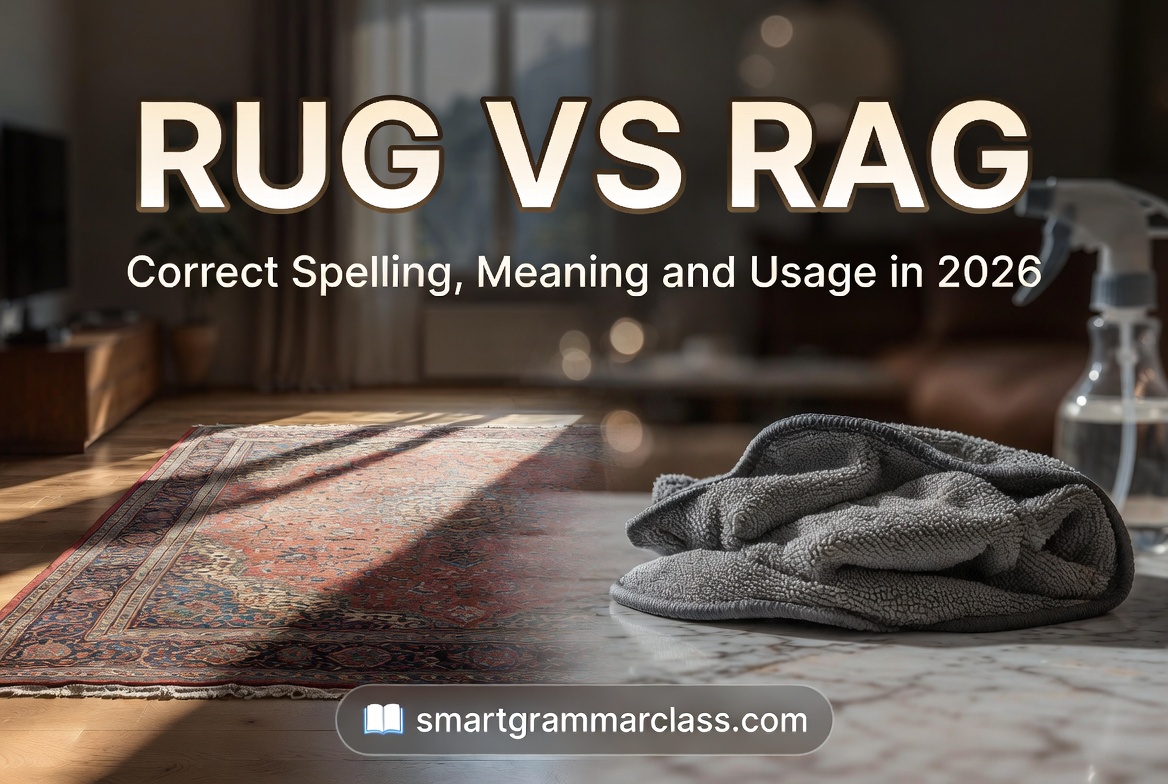
Confusion between rug vs rag often appears in English language learning contexts. Both rug and rag represent similar sounding words with very different meanings. A rug refers to floor covering used in home interior and decoration settings.
A rag means worn cloth or torn cloth used for cleaning tasks. This difference often creates confusion in writing and daily conversation usage. Understanding spelling and pronunciation guide helps avoid common mistakes easily.
In real everyday life, people use rug in living room decoration. However, rag is commonly used for cleaning, spills, and dusting tasks. Many learners confuse rugs vs rags while discussing types of household items.
Correct usage trends depend on proper context usage in written communication. Memory tips improve confusion avoidance for non-native speakers and learners. This guide supports accurate word usage and clear English pronunciation learning.
Also read this: Grately vs Greatly: Correct Spelling, Meaning, and Usage in 2026
Rug vs Rag Quick Answer
The simplest distinction comes down to purpose.
| Word | Meaning | Common Use |
| Rug | A decorative or functional floor covering | Home decor |
| Rag | A piece of old cloth used for cleaning | Cleaning or wiping |
Quick Examples
- She bought a colorful rug for the living room.
- He cleaned the table with a damp rag.
Even though only one letter changes the meaning changes entirely.
Why “Rug” and “Rag” Confuse So Many People
Many English learners struggle with similar sounding words. Rug and rag sound especially close in rapid speech. The vowel difference feels subtle especially for non-native speakers.
Another reason involves typing habits. Mobile keyboards autocorrect mistakes constantly. Someone may type “rug” while meaning “rag” because both words exist in standard English dictionaries. Spellcheck cannot always catch contextual mistakes.
Fast conversations also create confusion. In casual speech people shorten vowel sounds. That makes “rag” and “rug” blend together.
Here’s where context matters.
- If someone talks about carpets furniture or interior design they likely mean rug.
- If someone discusses cleaning wiping or polishing they almost certainly mean rag.
The distinction becomes obvious once you understand how each word functions in real situations.
What Does “Rug” Mean? Full Definition and Usage
A rug is a textile floor covering designed for comfort insulation decoration or protection. Rugs appear in homes offices hotels mosques libraries and public spaces around the world.
Unlike wall-to-wall carpeting rugs remain movable. That flexibility makes them popular in modern interior design.
Main Functions of Rugs
Rugs serve several practical purposes:
- Add warmth to cold flooring
- Reduce noise and echo
- Protect hardwood floors
- Improve room aesthetics
- Create visual boundaries
- Add texture and personality
A room without a rug often feels unfinished. Designers frequently call rugs the “anchor” of a space because they connect furniture visually.
Popular Types of Rugs
Different rug styles suit different homes and lifestyles.
| Rug Type | Description | Best Use |
| Area Rug | Medium or large decorative rug | Living rooms |
| Runner Rug | Long narrow rug | Hallways |
| Persian Rug | Traditional handcrafted rug | Luxury interiors |
| Outdoor Rug | Weather-resistant rug | Patios |
| Shag Rug | Thick fluffy texture | Bedrooms |
| Rag Rug | Rug made from fabric scraps | Rustic decor |
Each type creates a different atmosphere. Persian rugs bring elegance while shag rugs create comfort and softness.
Materials Used in Rugs
Modern rugs use both natural and synthetic fibers.
Natural Materials
- Wool
- Cotton
- Jute
- Silk
- Bamboo fibers
Synthetic Materials
- Polyester
- Nylon
- Polypropylene
- Acrylic
Natural rugs usually cost more because they offer durability and texture. Synthetic rugs however resist stains and require less maintenance.
Rugs in Interior Design
Interior designers use rugs strategically. A well-placed rug changes the visual balance of a room instantly.
For example:
- Large rugs make rooms appear bigger.
- Dark rugs create coziness.
- Light rugs create openness.
- Patterned rugs hide stains better.
Minimalist homes often feature neutral rugs while bohemian interiors prefer colorful layered textures.
What Does “Rag” Mean? Full Definition and Usage
A rag usually refers to an old piece of cloth used for wiping cleaning or polishing surfaces. Rags often come from worn clothing towels or leftover fabric scraps.
Unlike rugs rags focus on function rather than appearance.
Common Uses of Rags
People use rags daily for tasks such as:
- Dusting furniture
- Cleaning windows
- Polishing metal
- Wiping spills
- Automotive maintenance
- Painting projects
Mechanics painters and janitors rely heavily on durable cleaning rags.
Different Types of Rags
Not all rags look the same. Some specialize in certain tasks.
| Rag Type | Purpose |
| Microfiber Rag | Dusting and electronics |
| Cotton Rag | General cleaning |
| Shop Rag | Industrial cleaning |
| Polishing Rag | Waxing and polishing |
| Disposable Rag | Single-use sanitation |
Microfiber rags have become especially popular because they trap dust effectively without scratching surfaces.
How Rags Support Sustainability
Modern sustainability trends increased interest in reusable cleaning cloths.
Many households now avoid paper towels and instead use washable rags. That shift reduces waste significantly over time.
Old T-shirts frequently become household rags. Instead of throwing fabric away people recycle it into cleaning material. Small changes like this help reduce textile waste.
Rug vs Rag The Core Difference
Although these words sound alike their purposes differ completely.
| Feature | Rug | Rag |
| Main Purpose | Decoration and comfort | Cleaning and wiping |
| Typical Size | Large | Small |
| Placement | Floors | Utility areas |
| Appearance | Decorative | Functional |
| Material Quality | Often premium | Usually recycled |
| Value | Higher | Lower |
The easiest memory trick works like this:
- A rug upgrades a room.
- A rag cleans a room.
That distinction removes confusion instantly.
Origin and History of the Word “Rug”
The word rug traces back several centuries. Linguists connect it to Scandinavian and Old Norse influences involving coarse fabric coverings.
Originally rugs served practical purposes rather than decorative ones. People used heavy woven textiles to stay warm in cold climates.
Over time rug-making evolved into an art form. Persian Turkish and Central Asian cultures developed intricate weaving traditions that still influence modern rug production today.
Handmade rugs became symbols of:
- Wealth
- Craftsmanship
- Social status
- Cultural identity
Some antique Persian rugs now sell for thousands of dollars because collectors view them as historical artwork.
Origin and History of the Word “Rag”
The word rag comes from older Germanic roots associated with torn or shredded cloth.
Historically people reused fabric constantly because textiles cost money and required labor to produce. Nothing went to waste.
Old garments eventually became:
- Patching material
- Cleaning cloths
- Industrial wipes
- Fabric stuffing
Even during the Industrial Revolution factories reused cloth scraps for paper production.
That practical heritage explains why the word “rag” still carries a rough utilitarian meaning today.
How People Use “Rug” in Everyday English
The word rug appears often in home-related conversations.
Examples in Daily Life
- “The new rug changed the whole room.”
- “Don’t spill coffee on the rug.”
- “That Persian rug looks expensive.”
People also use rugs symbolically in design discussions. A statement rug can become the centerpiece of an entire room.
Rugs in Modern Lifestyle Culture
Social media transformed rugs into lifestyle products. Interior design videos frequently showcase:
- Layered rugs
- Vintage rugs
- Washable rugs
- Eco-friendly woven rugs
Neutral tones dominate modern design trends. Beige ivory sage green and earthy brown rugs remain especially popular in 2026.
How People Use “Rag” in Everyday English
The word rag appears more in practical settings.
Examples in Daily Life
- “Grab a rag and wipe the counter.”
- “The mechanic used an oily rag.”
- “Use a soft rag for cleaning glass.”
Unlike rugs rags rarely receive aesthetic attention. Their value comes from usefulness.
However certain crafting communities transformed rag materials into artistic projects including:
- Rag dolls
- Rag quilts
- Rag rugs
- Textile recycling art
Common Mistakes with Rug and Rag
Even fluent English speakers occasionally misuse these words.
Mistake One: Sound-Based Confusion
Fast pronunciation causes accidental substitution.
Incorrect:
- “Put the rag under the coffee table.”
Correct:
- “Put the rug under the coffee table.”
Mistake Two: Typing Errors
Autocorrect frequently changes intended words.
For example:
- Typing “rug cleaner” instead of “rag cleaner”
- Typing “dirty rug” when discussing cleaning cloths
Context matters more than spelling software.
Mistake Three: ESL Pronunciation Issues
English learners sometimes struggle with vowel distinctions.
- “Rug” uses a softer “uh” sound.
- “Rag” uses a broader “a” sound.
Practicing aloud helps significantly.
Rug vs Rag in Idioms and Expressions
English idioms often use common objects symbolically. Rug and rag both appear in several famous expressions.
Idioms with “Rug”
Pull the Rug Out From Under Someone
Meaning: Remove support suddenly.
Example:
- The company pulled the rug out from under employees after canceling the project.
Sweep Something Under the Rug
Meaning: Hide a problem instead of solving it.
Example:
- They tried to sweep the issue under the rug.
This idiom remains extremely common in politics workplaces and family discussions.
Idioms with “Rag”
Red Rag to a Bull
Meaning: Something that provokes anger immediately.
Example:
- Criticism about his work acts like a red rag to a bull.
Rag Trade
Meaning: The clothing industry.
This phrase appears more commonly in British English though some Americans still recognize it.
Can a Rag Be Used to Make a Rug?
Absolutely. In fact rag rugs became incredibly popular throughout history.
People traditionally created rag rugs from:
- Old shirts
- Torn fabric
- Worn blankets
- Textile scraps
Instead of wasting cloth families braided or wove strips into durable floor coverings.
Why Rag Rugs Became Popular
Rag rugs offered several advantages:
- Low cost
- Sustainability
- Handmade charm
- Durability
- Personal creativity
Today rag rugs returned as eco-friendly decor pieces. Rustic farmhouse interiors especially love them.
How Rag Rugs Are Made
Most rag rugs follow one of three methods:
| Method | Description |
| Braided | Fabric strips woven together |
| Crocheted | Yarn-like fabric loops |
| Loom-Woven | Traditional weaving process |
Handmade rag rugs often carry sentimental value because they reuse family fabrics and old clothing.
Are All Rugs Made from Natural Materials?
No. Modern rugs use many synthetic materials.
Natural Rugs
Natural rugs typically contain:
- Wool
- Cotton
- Silk
- Jute
These rugs feel luxurious and breathable. Wool rugs especially last decades with proper care.
Synthetic Rugs
Synthetic rugs often contain:
- Polyester
- Nylon
- Polypropylene
Advantages include:
- Lower cost
- Easier cleaning
- Stain resistance
- Moisture resistance
However some cheaper synthetic rugs wear out faster over time.
Natural vs Synthetic Rug Comparison
| Feature | Natural Rugs | Synthetic Rugs |
| Cost | Higher | Lower |
| Durability | Excellent | Moderate |
| Texture | Softer | Varies |
| Maintenance | More delicate | Easier |
| Eco-Friendliness | Better | Mixed |
Choosing the right rug depends on lifestyle budget and maintenance preferences.
Rug vs Rag in Modern Home Trends
Home design trends continue evolving rapidly in 2026.
Eco-Friendly Living
Sustainable living transformed both rug and rag usage.
Consumers increasingly prefer:
- Recycled rag rugs
- Organic cotton rugs
- Reusable cleaning rags
- Low-waste textile products
Environmental awareness plays a massive role in modern purchasing decisions.
Minimalist Interior Design
Minimalist homes favor understated rugs with:
- Soft neutral colors
- Simple geometric patterns
- Flat woven textures
Large statement rugs still exist though modern interiors often prioritize calm balanced aesthetics.
Smart Cleaning Culture
Reusable microfiber rags gained popularity because they:
- Reduce waste
- Save money
- Clean effectively
- Last longer
Many households now keep color-coded rags for different cleaning tasks.
Real-Life Examples of Rug and Rag
Seeing the words inside natural sentences helps cement understanding.
Examples Using “Rug”
- The fluffy rug made the room feel warmer.
- She vacuumed the rug carefully.
- Their antique rug became the centerpiece of the house.
- A patterned rug can hide dirt effectively.
Examples Using “Rag”
- He wiped grease from his hands using a rag.
- The painter carried several old rags.
- Use a damp rag for delicate surfaces.
- She turned old shirts into reusable rags.
Rug vs Rag Pronunciation Guide
Pronunciation confusion remains common so here’s a simple breakdown.
| Word | Pronunciation |
| Rug | “ruhg” |
| Rag | “rahg” |
Helpful Pronunciation Tip
- Rug rhymes loosely with “hug.”
- Rag rhymes loosely with “bag.”
Practicing those pairings makes the difference easier to hear.
Why Context Matters More Than Sound
English contains many words that sound similar:
- Their vs there
- Desert vs dessert
- Affect vs effect
Rug and rag belong in the same category.
Native speakers rely heavily on context rather than pronunciation alone. Once you associate:
- Rugs with floors
- Rags with cleaning
the confusion almost disappears.
Quick Comparison Chart
| If You Mean… | Correct Word |
| Decorative floor covering | Rug |
| Cleaning cloth | Rag |
| Hallway textile | Rug |
| Wiping material | Rag |
| Handmade woven decor | Rug |
| Old reusable cloth | Rag |
FAQs
What is the meaning of rug vs rag in English language?
The word rug means a floor covering often used in home interior decoration. The word rag refers to a worn cloth or torn cloth used for cleaning tasks and daily use.
What is the main difference between rug vs rag?
The main difference in rug vs rag is based on usage and context usage in household items. A rug is decorative, while a rag is used for cleaning and wiping surfaces.
Why are spelling and pronunciation of rug and rag confusing?
The spelling and pronunciation guide of rug and rag create confusion because they are similar sounding words. This often leads to confusion in spoken and written English.
How are rug and rag used in daily life situations?
A rug is placed in the living room as a decorative item for comfort and style. A rag is used for cleaning, dusting, and wiping spills in everyday tasks.
What are common mistakes in using rug vs rag, and how to avoid them?
Common mistakes happen when learners mix word usage due to confusion avoidance issues. Using memory tips and focusing on correct usage helps non-native speakers avoid errors effectively.
Conclusion
The topic of rug vs rag explains the clear difference between rug and rag in meaning. A rug serves as a floor covering in home interior decoration, while a rag is used for cleaning tasks, worn cloth, and daily cleaning use. Their spelling and pronunciation often cause confusion because they are similar sounding words in English learning. Proper context usage and correct usage help improve understanding in everyday life situations and writing. Using memory tips and focusing on confusion avoidance ensures accurate use of rug vs rag in conversation and text.

Mia Rose is a dedicated grammar expert and language educator committed to helping learners master English with clarity and confidence. With extensive experience in teaching grammar, writing, and communication skills, she specializes in turning complex language rules into simple, easy-to-understand lessons.
At Smart Grammar Class, Mia creates accurate, well-researched, and practical content tailored for students, professionals, and everyday learners. Her teaching style focuses on real-world examples and clear explanations, enabling readers to confidently apply grammar rules in both writing and speaking.
Mia is committed to maintaining high editorial standards, ensuring every piece of content is reliable, up-to-date, and aligned with modern English usage. Her mission is to make grammar accessible, engaging, and useful for learners at all levels.