Understanding hemmed vs unhemmed helps improve accurate communication in everyday writing and fashion terminology. Many readers confuse hemmed meaning, unhemmed meaning, correct spelling, word usage, grammar, and English usage.
This guide explains the differences, comparison, and distinction using practical examples from sewing, tailoring, and clothing. You will also understand how garment finishing, fabric finishing, and edge finishing affect finished appearance and overall wearability.
Whether buying hemmed pants, unhemmed pants, tailored trousers, jeans, dress pants, or suit pants, knowing clothing fit matters. We cover hemming, hem, hemline, fabric edge, finished edge, unfinished edge, raw edge, folded hem, sewn hem, stitching, seam, and clothing construction clearly.
You will learn when to choose hemmed or unhemmed, understand the alteration process, professional tailoring, custom inseam, leg measurement, exact leg length, and achieve a personalized fit with confidence.
Also read this: Kneck vs Neck: Correct Spelling, Meaning, and Usage in 2026
Hemmed vs. Unhemmed: Quick Answer
If you need a fast explanation, here it is:
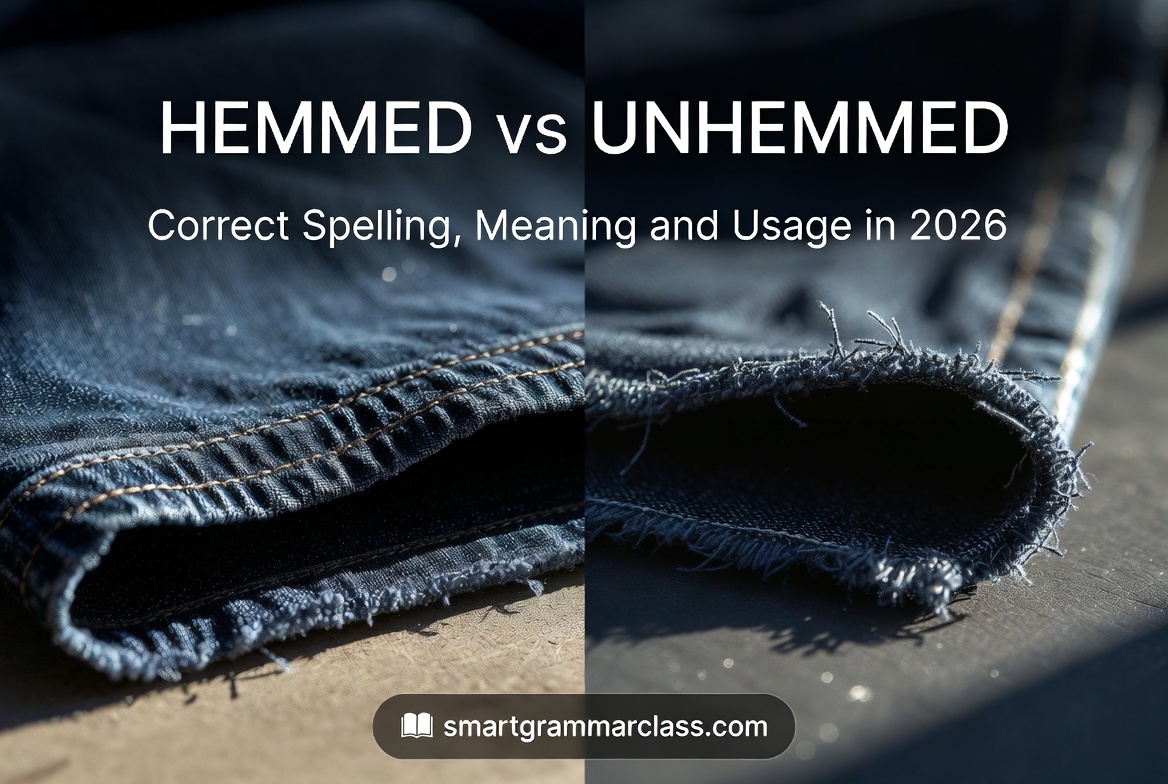
- Hemmed means the edge of a fabric has been folded and sewn to create a finished edge.
- Unhemmed means the edge has not been folded or sewn and remains unfinished.
In most situations:
- Formal garments are hemmed.
- Professional tailoring includes hemming.
- Raw-edge fashion often uses unhemmed finishes.
- Fabric purchased for sewing projects is usually unhemmed.
Quick Comparison Table
| Feature | Hemmed | Unhemmed |
| Edge Finish | Finished | Unfinished |
| Appearance | Clean and polished | Raw and casual |
| Fraying Risk | Low | Higher |
| Durability | Stronger | Often less durable |
| Common in Formal Wear | Yes | Rarely |
| Common in Fashion Trends | Sometimes | Frequently |
| Requires Sewing | Yes | No |
| Professional Look | High | Depends on style |
What Does Hemmed Mean?
The word hemmed comes from the noun hem, which refers to the finished edge of a piece of cloth.
A hem is created by folding fabric inward and securing it with stitches. This process hides raw edges and prevents unraveling.
When someone says a garment is hemmed, they mean the fabric edge has undergone a finishing process.
Examples include:
- Hemmed pants
- Hemmed skirts
- Hemmed curtains
- Hemmed tablecloths
- Hemmed sleeves
A proper hem improves both appearance and durability.
Imagine buying a formal suit. The trousers typically feature carefully hemmed legs. Without those hems, the fabric would appear unfinished and could begin fraying after repeated wear.
Why Hemming Matters
Hemming serves several important purposes:
- Prevents fabric fraying
- Increases garment lifespan
- Improves visual appeal
- Creates professional finishes
- Allows size adjustments
- Enhances comfort
Many people underestimate how much a simple hem contributes to clothing quality. In reality, hemming often separates premium garments from poorly finished ones.
What Does Unhemmed Mean?
The term unhemmed describes fabric or clothing that lacks a finished hem.
Instead of being folded and stitched, the edge remains raw.
This doesn’t automatically mean something is defective. In many cases, unhemmed edges are intentional.
Examples include:
- Fabric sold by the yard
- Raw denim jeans
- Distressed shorts
- DIY sewing projects
- Fashion-forward streetwear
Modern fashion frequently embraces unfinished details. Designers sometimes leave edges unhemmed to create texture, movement, and an intentionally rugged appearance.
Characteristics of Unhemmed Fabric
Unhemmed edges often display:
- Visible fabric fibers
- Raw cut lines
- Natural fraying
- Casual appearance
- Flexible customization options
Depending on the fabric type, an unhemmed edge may remain stable or unravel rapidly.
Hemmed vs. Unhemmed: Key Differences
Understanding the practical differences helps you choose the right option for your needs.
Side-by-Side Comparison
| Aspect | Hemmed | Unhemmed |
| Construction | Folded and stitched | Raw cut edge |
| Maintenance | Easier | Requires monitoring |
| Fraying | Minimal | More likely |
| Formality | Professional | Casual |
| Longevity | Longer lasting | Variable |
| Tailoring | Usually complete | Often unfinished |
| Appearance | Refined | Relaxed |
| Cost | Slightly higher | Usually lower |
The best choice depends on intended use rather than one option being universally superior.
Is “Hemmed” Different from “Hemmed In”?
Many people encounter another expression involving the word hemmed.
Literal Meaning
In sewing, hemmed refers to finishing fabric edges.
Example:
“The tailor hemmed the trousers.”
Figurative Meaning
Hemmed in means restricted, confined, or surrounded.
Examples:
- The mountains hemmed in the valley.
- Heavy traffic hemmed in the vehicles.
- Tall buildings hemmed in the small park.
The phrase has nothing to do with sewing despite sharing the same root word.
Context determines which meaning applies.
Is Unhemmed a Real Word?
Yes.
Unhemmed is a legitimate English word recognized by dictionaries and widely used in sewing, tailoring, textile manufacturing, and fashion industries.
The prefix un- simply indicates the absence of a hem.
Similar constructions include:
- Unfinished
- Unpainted
- Unopened
- Untreated
Therefore, unhemmed follows standard English word formation rules.
Why Some Spell Checkers Flag It
Occasionally, older software may not recognize specialized sewing terminology.
That does not make the word incorrect.
Fashion professionals, garment manufacturers, textile experts, and sewing instructors routinely use the term.
When Should You Use Hemmed?
A hemmed finish works best whenever appearance, durability, and professionalism matter.
Common Situations
Formal Clothing
Formal garments almost always feature hems.
Examples include:
- Dress pants
- Business suits
- Formal skirts
- Evening gowns
School Uniforms
Uniform standards often require clean and finished edges.
Home Decor
Many household textiles use hems.
Examples include:
- Curtains
- Drapes
- Napkins
- Bedding accessories
Professional Tailoring
Tailors frequently adjust hems to achieve proper garment length.
Example Sentences
- The tailor hemmed the trousers perfectly.
- She purchased a beautifully hemmed skirt.
- The curtains arrived fully hemmed.
- The sleeves were neatly hemmed.
- Every edge of the tablecloth was hemmed.
When Should You Use Unhemmed?
Unhemmed is appropriate whenever fabric lacks a finished edge.
Fabric for Sewing
Most fabric sold in stores arrives unhemmed because buyers need flexibility for their projects.
DIY Alterations
People often purchase unhemmed materials for custom sizing.
Raw-Hem Fashion
Fashion trends increasingly embrace unfinished edges.
Examples include:
- Distressed jeans
- Frayed shorts
- Casual jackets
- Streetwear apparel
Example Sentences
- The fabric remained unhemmed until construction began.
- The designer intentionally left the edges unhemmed.
- These jeans feature an unhemmed ankle opening.
- The curtain panels arrived unhemmed for custom sizing.
- The raw hem gives the garment a modern look.
Common Mistakes Writers Make
Even experienced writers occasionally misuse these terms.
Assuming Hemmed Means Finished Entirely
A garment may be hemmed while still requiring other alterations.
A hem only refers to edge finishing.
Confusing Unhemmed with Damaged
Unhemmed does not automatically mean defective.
Many products intentionally feature unhemmed edges.
Using Finished Instead of Hemmed
While related, these terms are not interchangeable.
A finished garment may involve:
- Seams
- Closures
- Linings
- Hems
A hem is only one finishing element.
Ignoring Context
The meaning changes significantly between sewing and figurative expressions.
Always consider context before choosing a word.
Hemmed vs. Unhemmed in Fashion
Fashion trends constantly evolve.
Over the last decade, unhemmed designs have become increasingly popular.
Why Designers Use Unhemmed Edges
Designers often seek visual contrast and texture.
Benefits include:
- Casual aesthetic
- Modern appearance
- Distinctive silhouette
- Natural movement
- Streetwear appeal
Popular Unhemmed Fashion Items
- Distressed denim
- Cropped jeans
- Cutoff shorts
- Oversized jackets
- Bohemian garments
Why Hemmed Clothing Remains Essential
Despite modern trends, hemmed garments still dominate professional and formal wardrobes.
A hemmed edge communicates:
- Precision
- Craftsmanship
- Structure
- Elegance
As a result, luxury tailoring continues to rely heavily on traditional hemming techniques.
Hemmed vs. Unhemmed in Sewing
Sewing provides the clearest example of these terms in action.
Why Hems Prevent Fraying
Fabric consists of interwoven fibers.
When cut, those fibers may loosen over time.
Hemming encloses the cut edge and limits fiber movement.
This significantly reduces wear.
Fabrics That Usually Need Hemming
Many woven fabrics benefit from hemming.
Examples include:
- Cotton
- Linen
- Silk
- Rayon
- Wool
Fabrics Less Likely to Fray
Certain knit materials naturally resist unraveling.
Examples include:
- Jersey knit
- Interlock knit
- Ponte knit
These fabrics sometimes function effectively without traditional hems.
Common Hem Types
| Hem Type | Typical Use |
| Double Fold Hem | Pants and skirts |
| Blind Hem | Formal wear |
| Rolled Hem | Lightweight fabrics |
| Narrow Hem | Delicate garments |
| Machine Hem | Everyday clothing |
Each technique serves different functional and aesthetic purposes.
Case Study: Tailored Dress Pants
Consider a customer purchasing dress pants.
Initially, the pants arrive longer than necessary.
A tailor measures the desired length and creates a precise hem.
Before Hemming
- Excess fabric gathers at the ankle
- Appearance looks untidy
- Walking comfort decreases
After Hemming
- Proper fit achieved
- Professional appearance improved
- Fabric wear reduced
- Comfort enhanced
This simple alteration dramatically improves overall presentation.
Case Study: Raw-Hem Denim Trend
Raw-hem jeans became increasingly popular because they combine simplicity with individuality.
Manufacturers cut the denim without adding a traditional hem.
Over time, natural fraying develops.
Benefits
- Unique appearance
- Fashion-forward styling
- Relaxed aesthetic
- Minimal processing
Drawbacks
- Potential for excessive fraying
- Shorter lifespan in some cases
- Less formal appearance
This example demonstrates how unhemmed designs can serve intentional stylistic goals.
Examples in Everyday Sentences
Examples Using Hemmed
- The tailor hemmed the trousers before the wedding.
- Her skirt was expertly hemmed.
- The curtains arrived already hemmed.
- Every edge was carefully hemmed.
- The sleeves looked professionally hemmed.
- The dress required a new hem.
- The garment appeared polished because it was hemmed.
- The uniform was properly hemmed.
- The linen napkins were hemmed by hand.
- The tailor hemmed the jacket sleeves.
Examples Using Unhemmed
- The denim shorts featured unhemmed edges.
- The fabric remained unhemmed for customization.
- The designer preferred an unhemmed finish.
- The curtain panels were sold unhemmed.
- The raw edge was intentionally unhemmed.
- The project began with unhemmed material.
- The skirt had an unhemmed border.
- The jeans displayed an unhemmed ankle.
- The cloth remained unhemmed during fitting.
- The garment embraced an unhemmed aesthetic.
Synonyms and Related Terms
Alternatives for Hemmed
Depending on context, these terms may work:
- Finished
- Bound
- Folded
- Stitched
- Tailored
- Turned under
- Refined
- Completed
Alternatives for Unhemmed
Possible alternatives include:
- Raw-edged
- Unfinished
- Cut edge
- Frayed edge
- Raw cut
- Untreated edge
- Exposed edge
Writers should choose the most precise term based on context.
Hemmed vs. Unhemmed: Grammar and Usage Rules
Both words commonly function as adjectives.
Examples:
- Hemmed trousers
- Unhemmed fabric
They may also appear in verb constructions.
Examples:
- The tailor hemmed the pants.
- The garment remained unhemmed.
Parts of Speech
| Word | Part of Speech |
| Hemmed | Verb, adjective |
| Unhemmed | Adjective |
| Hem | Noun, verb |
| Hemming | Verb, noun |
Hyphenation Rules
Normally:
- Hemmed fabric
- Unhemmed edge
No hyphen is required.
However, compound modifiers may occasionally use hyphens for clarity depending on style guidelines.
FAQs
What does hemmed and unhemmed mean in clothing?
Hemmed meaning refers to a garment with a folded hem, sewn hem, and finished edge created through hemming and stitching. Unhemmed meaning describes an unfinished garment with a raw edge or unfinished edge, allowing professional tailoring for a custom fit and proper fit.
What is the difference between hemmed vs unhemmed pants?
The main differences in hemmed vs unhemmed involve clothing fit, garment finishing, and clothing customization. Hemmed pants are finished clothing ready to wear, while unhemmed pants require the alteration process to achieve the exact leg length, custom inseam, and personalized fit.
Should you choose hemmed or unhemmed when buying suit pants or jeans?
You should choose hemmed or unhemmed based on your body proportions, leg measurement, and preferred clothing length. Unhemmed dress pants, suit pants, tailored trousers, and jeans provide flexibility for tailoring options, while hemmed versions offer immediate wearability.
Why is hemming important in sewing, tailoring, and fashion?
In sewing, tailoring, and fashion, hemming strengthens the fabric edge, improves edge finishing, and creates a clean finished appearance. It enhances clothing craftsmanship, supports durable fabric construction, and gives every garment a polished, professional look.
How do clothing measurements and garment sizing affect hemmed and unhemmed clothing?
Accurate clothing measurements, garment sizing, inseam length, pant length, and trouser length help determine the best option for finished pants or unfinished clothing. They also reduce common misconceptions, improve clothing accuracy, and ensure the right balance, style, and overall wardrobe fit.
Conclusion
In summary, understanding hemmed vs unhemmed, hemmed meaning, unhemmed meaning, correct spelling, and proper word usage helps you communicate confidently while making better clothing and fashion decisions. Whether selecting hemmed pants, unhemmed pants, dress pants, or suit pants, knowing the role of hemming, tailoring, garment finishing, clothing fit, leg measurement, and custom inseam ensures a personalized fit and polished results. By recognizing these differences, you can choose the right option for your needs with greater accuracy and confidence.

Mia Rose is a dedicated grammar expert and language educator committed to helping learners master English with clarity and confidence. With extensive experience in teaching grammar, writing, and communication skills, she specializes in turning complex language rules into simple, easy-to-understand lessons.
At Smart Grammar Class, Mia creates accurate, well-researched, and practical content tailored for students, professionals, and everyday learners. Her teaching style focuses on real-world examples and clear explanations, enabling readers to confidently apply grammar rules in both writing and speaking.
Mia is committed to maintaining high editorial standards, ensuring every piece of content is reliable, up-to-date, and aligned with modern English usage. Her mission is to make grammar accessible, engaging, and useful for learners at all levels.