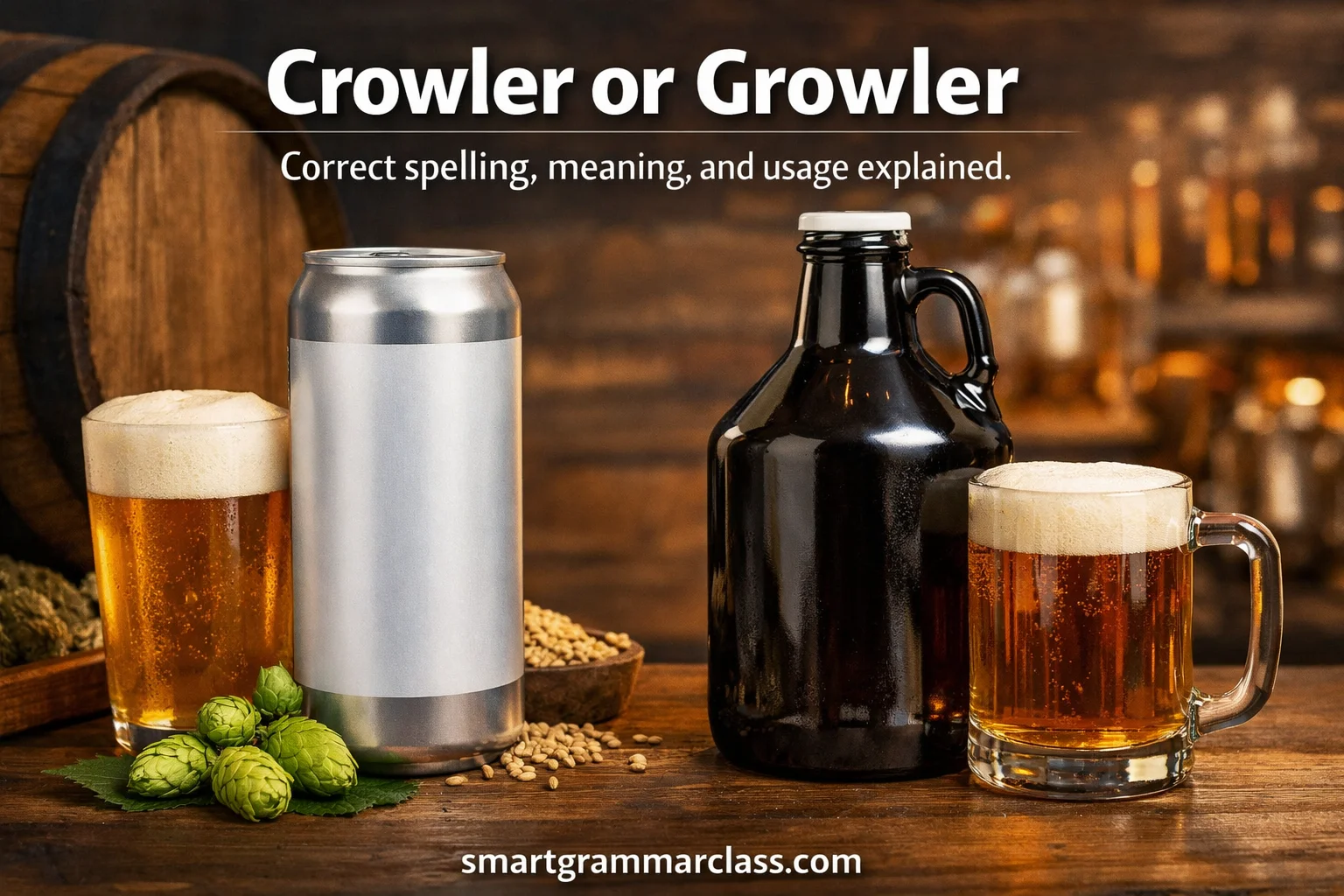
In the craft beer world, many people often wondered about crowler vs growler, as these words sound similar but refer to different containers. A crowler is a 32-ounce, single-use sealed aluminum can, usually ordered at a modern brewery and perfect for portable use without worrying about cleaning.
A growler, on the other hand, is a 64-ounce, reusable glass or metal jug, often brown, refillable, and designed for sharing larger amounts over weeks if stored properly. From my own real-world visits to taprooms, I’ve seen how this small difference really helps you order correctly and avoid a mix-up that could confuse both readers and the bartender.
The choice between them depends on your needs, because picking the wrong option can lose freshness faster than you expect, especially with carbonated drinks where brewers want you to enjoy the peak flavor as intended. A crowler suits quick, take-home moments, while a growler fits those who love refill, environmentally friendly habits and ongoing use.
In today’s industry, where breweries have evolved since the early 2020 pandemic and taprooms increased packaging options, both have gained popularity as drinking vessels. This guide gives simple, clear explanations, examples, and practical tips so you can write and speak with confidence, whether for a blog, casual chats, or formal communication where precision and clarity truly matter.
Also read this : Homey or Homie: Correct Spelling, Meaning and Usage in 2026
Crowler vs Growler: Quick Answer That Saves You Time
If you only need the essentials, here it is:
- A crowler is a sealed aluminum can, typically 32 oz
- A growler is a refillable glass jug, usually 64 oz
- Crowlers last longer unopened
- Growlers hold more beer but lose freshness faster
Simple rule
- Choose a crowler for freshness and portability
- Choose a growler for volume and reuse
Now let’s dig deeper so you understand why that matters.
What Is a Crowler? Meaning, Features, and Real Use
Picture this. You’re at a craft brewery. You try a limited-release IPA. It’s incredible. You want to take it home.
Instead of pouring it into a jug, the staff fills a large aluminum can and seals it on the spot. That’s a crowler.
Crowler definition
A crowler is a 32 oz aluminum can filled and sealed at a brewery using a canning machine. It’s airtight, lightproof, and designed for single use.
Why breweries love crowlers
Crowlers solve a major problem: oxygen exposure.
Once oxygen touches beer, flavor starts to degrade. Crowlers eliminate that risk almost entirely.
Key features of a crowler
- Airtight seal keeps oxygen out
- Aluminum blocks light which protects flavor
- Lightweight and portable
- Single-use container
- Typically 32 oz capacity
When people choose a crowler
- Taking home specialty or limited beers
- Traveling with beer safely
- Sharing smaller quantities
- Storing beer for a few days without quality loss
Real-life example
A customer visits a brewery on Friday. They buy a crowler of a hazy IPA. They open it Sunday night. The beer still tastes fresh and aromatic.
That’s the crowler advantage.
What Is a Growler? Meaning, History, and Modern Use
Now let’s switch gears. The growler has history. It’s been around far longer than the crowler.
Growler definition
A growler is a refillable container, usually glass, used to transport draft beer. The standard size is 64 oz.
Where the name “growler” comes from
Back in the late 1800s, people carried beer in metal pails. As carbon dioxide escaped, it made a low rumbling sound.
That “growling” noise gave the container its name.
Key features of a growler
- Reusable and eco-friendly
- Large capacity usually 64 oz
- Available in glass, ceramic, or stainless steel
- Sealed with screw cap or flip-top lid
- Widely accepted at breweries worldwide
When people use a growler
- Regular brewery visits
- Buying beer in bulk
- Home entertaining
- Reducing packaging waste
Real-life example
A regular brewery customer brings in the same growler every weekend. They refill it with fresh lager and drink it the same day.
That’s classic growler usage.
Crowler or Growler: Detailed Comparison That Actually Matters
Most articles skim this part. This one won’t.
Here’s a clear side-by-side comparison so you can decide fast.
| Feature | Crowler | Growler |
| Material | Aluminum | Glass, ceramic, or steel |
| Size | ~32 oz | ~64 oz (standard) |
| Reusability | Single-use | Reusable |
| Seal | Fully airtight | Partial seal |
| Freshness | Lasts longer unopened | Best consumed quickly |
| Light Protection | Complete | Limited (unless opaque) |
| Portability | Easy to carry | Bulkier and fragile |
| Cost Over Time | Higher (single-use) | Lower (reusable) |
What this means for you
- Crowlers protect quality
- Growlers maximize quantity
Different goals. Different tools.
Which Keeps Beer Fresher: Crowler or Growler?
This is the question most people care about.
Let’s break it down clearly.
Why crowlers preserve freshness better
- Oxygen is removed during sealing
- No air enters after sealing
- Aluminum blocks UV light completely
Why growlers lose freshness faster
- Caps aren’t perfectly airtight
- Opening introduces oxygen
- Glass allows light exposure
Freshness timeline comparison
| Time After Fill | Crowler Condition | Growler Condition |
| Same day | Excellent | Excellent |
| 24 hours | Excellent | Good |
| 48 hours | Very good | Noticeable decline |
| 72+ hours | Good | Often flat |
Bottom line
If freshness matters most, crowlers win.
When to Choose a Crowler Over a Growler
Sometimes the choice is obvious. Sometimes it isn’t.
Here’s when crowlers clearly make more sense.
Choose a crowler if you:
- Want beer to last several days
- Are traveling or commuting
- Prefer smaller quantities
- Want maximum flavor preservation
- Are buying rare or limited releases
Scenario example
You’re heading to a weekend trip. You won’t drink the beer immediately. A crowler ensures it still tastes fresh later.
When a Growler Is the Better Choice
Crowlers aren’t always the answer.
Growlers still shine in the right situations.
Choose a growler if you:
- Visit breweries regularly
- Want to reduce waste
- Need larger volumes
- Plan to drink the beer the same day
- Enjoy traditional beer culture
Scenario example
You’re hosting a small gathering tonight. A growler gives you enough beer for everyone without buying multiple containers.
Common Mistakes People Make With Crowlers and Growlers
Even experienced beer drinkers get this wrong sometimes.
Mistakes to avoid
- Assuming both keep beer fresh equally
- Reusing crowlers which can be unsafe
- Leaving growlers unopened for days
- Not refrigerating after filling
- Mixing up sizes and expectations
Quick tip
Treat a growler like fresh juice. Drink it quickly. Don’t store it for days expecting the same quality.
Real-Life Usage Examples: Crowler vs Growler in Everyday Life
Let’s make this practical.
At a brewery
- “Fill this growler with your house lager”
- “I’ll take two crowlers of that IPA”
On social media
- “Grabbed a fresh crowler for tonight”
- “Refilled my growler for the weekend”
In casual conversation
People often mix up the terms. Now you won’t.
Google Trends Insight: Crowler vs Growler Popularity in 2026
Search data tells an interesting story.
- “Growler” still leads due to history
- “Crowler” continues to rise with craft beer growth
- Searches spike on weekends and holidays
What this means
Crowlers are newer but gaining traction fast. Craft beer culture is driving that shift.
Environmental Impact: Are Crowlers or Growlers Better?
Sustainability matters more than ever.
Growler environmental impact
- Reusable for years
- Reduces packaging waste
- Best option for eco-conscious drinkers
Crowler environmental impact
- Single-use but recyclable
- Requires energy to produce
- Convenient but less sustainable
Eco comparison table
| Factor | Crowler | Growler |
| Waste | Higher | Lower |
| Reusability | None | High |
| Recycling | Yes | Not needed often |
| Long-term impact | Moderate | Low |
Best eco choice
A stainless steel growler offers the best long-term sustainability.
Case Study: Brewery Customer Behavior in 2026
Let’s look at how real customers behave today.
Case study summary
A mid-sized craft brewery tracked takeaway orders over 6 months.
Key findings
- 60% of new customers chose crowlers
- 75% of repeat customers preferred growlers
- Crowler sales increased during travel seasons
- Growler usage remained steady among locals
What this tells you
- New drinkers value convenience
- Regulars value tradition and savings
Storage Tips: How to Keep Your Beer Fresh Longer
Even the best container won’t help if you store it wrong.
Crowler storage tips
- Keep refrigerated at all times
- Avoid shaking
- Open when ready to drink
- Consume within 3–5 days
Growler storage tips
- Refrigerate immediately
- Keep upright
- Drink within 24–48 hours
- Seal tightly after pouring
Pro tip
Once opened, drink both quickly. Oxygen works fast.
Cost Comparison: Crowler vs Growler Over Time
Money matters. Let’s break it down.
Crowler costs
- Paid per fill
- No upfront investment
- More expensive over time
Growler costs
- Initial purchase required
- Cheaper refills
- Long-term savings
Cost breakdown example
| Item | Crowler | Growler |
| Initial cost | None | $10–$30 |
| Per fill | Slightly higher | Lower |
| Long-term use | Expensive | Cost-effective |
FAQs
What is the main difference between a crowler and a growler?
A crowler is a 32-ounce, single-use sealed aluminum can, while a growler is a 64-ounce, reusable glass or metal jug. The difference mainly comes down to size, material, and whether it is refillable or not.
Which option keeps beer fresh longer, crowler or growler?
A crowler usually keeps beer fresh longer because it is airtight and sealed at the brewery. A growler can lose freshness faster after opening, especially if not stored properly.
Why do people get confused between crowler and growler?
Many people get confused because the words sound similar and are often used in the same craft beer context. This mix-up happens a lot in casual communication and even in some blogs.
When should you choose a growler over a crowler?
You should choose a growler if you want a reusable, environmentally friendly option for sharing larger amounts of beer. It is also great if you plan to refill it regularly from your favorite brewery.
Are crowlers becoming more popular in the modern brewery scene?
Yes, crowlers have gained popularity, especially after the early 2020 pandemic, when taprooms increased take-home packaging options. Many breweries now offer them as a quick and portable solution for customers.
Conclusion
In the end, understanding crowler vs growler makes your beer experience much smoother and more enjoyable. The key difference lies in size, material, and usage, where a crowler offers a sealed, single-use option for quick freshness, while a growler provides a reusable, refillable choice for sharing and sustainability. As the craft beer industry continues to evolve, knowing when to choose the right container helps you order correctly, maintain flavor, and avoid confusion. Whether you are writing a blog or simply talking at a brewery, using the right words with confidence improves both your communication and overall experience.

Mia Rose is a dedicated grammar expert and language educator committed to helping learners master English with clarity and confidence. With extensive experience in teaching grammar, writing, and communication skills, she specializes in turning complex language rules into simple, easy-to-understand lessons.
At Smart Grammar Class, Mia creates accurate, well-researched, and practical content tailored for students, professionals, and everyday learners. Her teaching style focuses on real-world examples and clear explanations, enabling readers to confidently apply grammar rules in both writing and speaking.
Mia is committed to maintaining high editorial standards, ensuring every piece of content is reliable, up-to-date, and aligned with modern English usage. Her mission is to make grammar accessible, engaging, and useful for learners at all levels.